


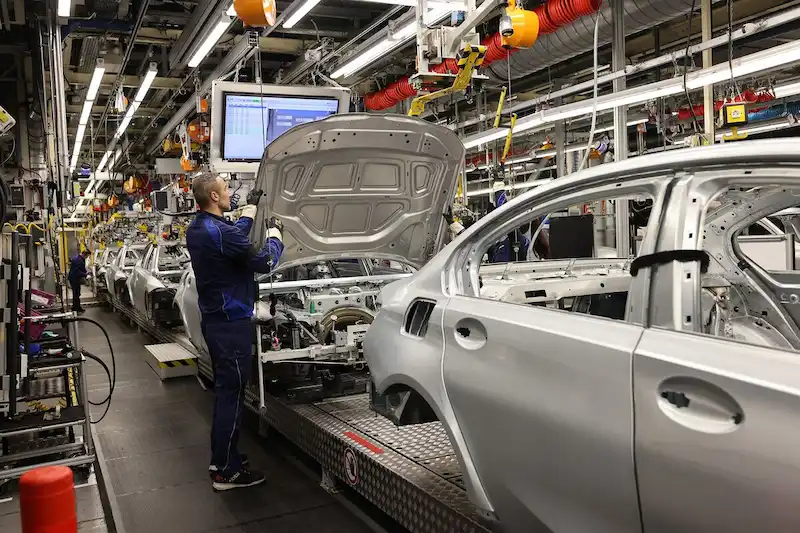


BMW is making a bold move in its bid to challenge electric vehicle (EV) leaders Tesla Inc. and BYD Co. The German automaker recently announced that it will be investing €650 million ($712 million) to transform its flagship factory in Munich into its first-ever plant dedicated solely to the production of fully electric vehicles. The ambitious overhaul will involve the construction of four buildings, including a brand new assembly line, and is expected to be completed by the end of 2027.
Since 1922, BMW's Munich factory has been churning out combustion-engine models, plug-in hybrids, and full EVs such as the i4. However, with the industry shifting towards EVs, BMW is determined to defend its market share against fierce competitors like Tesla and Mercedes-Benz. Europe and China are leading the charge towards electric mobility, and BMW is positioning itself to meet the growing demand.
The revamp of the Munich plant will make room for the production of BMW's next-generation "Neue Klasse" EVs, scheduled to begin in 2026. These EVs promise cutting-edge digital features, longer ranges, and faster charging capabilities. In addition to Munich, BMW will also produce these models in Hungary, China, and Mexico. To accommodate the changes, BMW has relocated its engine manufacturing to the United Kingdom and Austria.
This investment by BMW not only further solidifies its commitment to the electric revolution but is also a significant boost for Germany's economy. The country has been grappling with rising energy prices, labor costs, and sluggish growth. Although auto production in Germany increased last year, it has yet to recover fully from the effects of the pandemic. The Munich factory alone employs approximately 7,000 people, and the transformation is expected to create new job opportunities in the EV sector.
BMW remains confident in the demand for its EVs, stating that it expects to sell over half a million fully electric cars in 2024. The company's EV sales soared by an impressive 75% last year, while overall deliveries increased by 6.5%. Furthermore, with all current electric models turning a profit, BMW foresees even higher EV margins as it introduces newer and more advanced EV models.
This ambitious transformation of BMW's historic factory is a testament to the automaker's commitment to the future of electric mobility. By focusing solely on EV production at the Munich plant, BMW aims to establish a strong position in the EV market and compete head-on with industry giants like Tesla. As the world transitions towards sustainable transportation, BMW's bold move sets the stage for an exciting future for electric vehicles.