


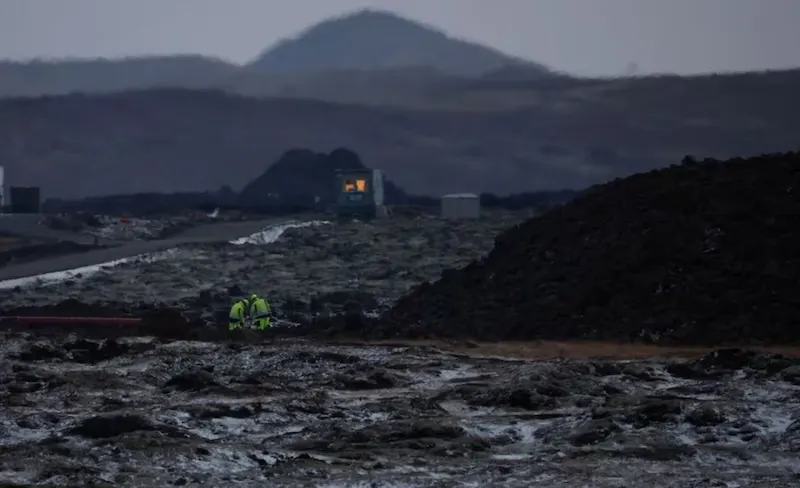


After days of intense volcanic activity, it seems that the eruption on the Reykjanes Peninsula in Iceland is finally subsiding. The threat it posed to the seaside town of Grindavik has diminished, much to the relief of its 4,000 residents. However, authorities and geologists are urging caution, warning that the danger is far from over.
On Sunday, a flow of scorching lava reached the outskirts of Grindavik, engulfing three houses in flames. Thankfully, all the residents had been evacuated beforehand, as they had been in November during a previous eruption. While live footage on Tuesday showed no signs of molten rock emerging from the ground, experts are quick to point out that new fissures could appear at any moment.
The Icelandic Meteorological Office has emphasized the ongoing risk, highlighting the possibility of sudden cracks opening up without warning. They stress that magma continues to flow underground, further emphasizing the need for caution. Rikke Pedersen, the head of the Nordic Volcanological Centre research group, based in Reykjavik, expressed concerns over the uncertain nature of the area, stating, "This is a very hazardous area and has the potential to repeat similar events in the future."
For the residents of Grindavik, the situation has been nothing short of nerve-wracking. Hrannar Jon Emilsson, a local resident, had to witness his nearly completed house burn down on live television following Sunday's eruption. "You sit and watch the news showing everything go up in smoke," he told Icelandic broadcaster Channel 2. Emilsson had hoped to move into his new home before spring, but the volatile nature of the volcano dashed his plans.
What makes this eruption particularly noteworthy is that it is the second in the Reykjanes Peninsula within the past four weeks and the fifth since the start of the year. This series of eruptions has left the region in a constant state of uncertainty. The eruption is a stark reminder of the raw power of nature, as well as the vulnerability of those living in close proximity to volcanic activity.
While the immediate threat may have diminished, the people of Grindavik, as well as the surrounding areas, must remain vigilant and prepared. The possibility of future eruptions and the unpredictability of volcanic events underscore the need for ongoing monitoring and planning. As the situation unfolds, residents and authorities must stay updated and prepared for any eventualities.