


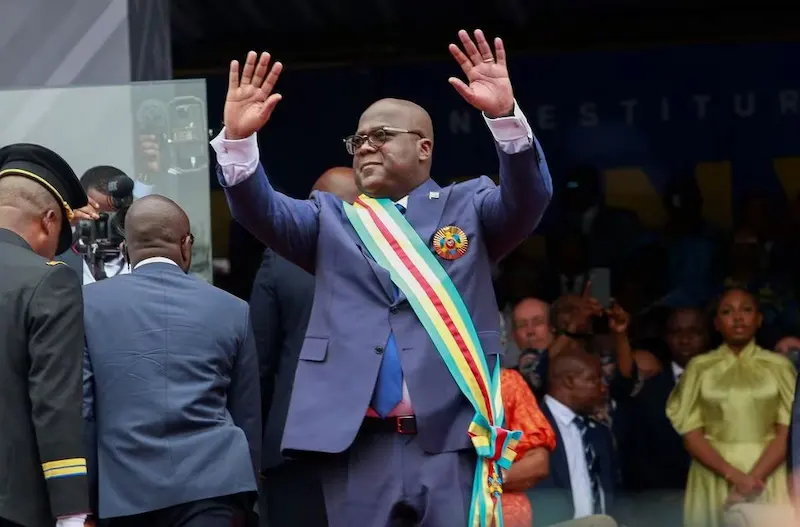


Democratic Republic of Congo President Felix Tshisekedi was inaugurated for a second five-year term on Saturday amid a deepening political standoff. Tshisekedi's re-election victory in the December general election has been marred by allegations of widespread irregularities, leading his opponents to refuse to recognize the results. Despite acknowledging some issues, authorities have dismissed claims that the vote was stolen.
The inauguration ceremony took place in a packed stadium in the capital city of Kinshasa, with supporters waving flags, government officials, and foreign envoys in attendance. Tshisekedi, in his speech, expressed an understanding of the nation's aspirations for improved living conditions and economic opportunities. Promising to create more jobs, he also emphasized a need for a comprehensive restructuring of the country's security and defense apparatus and diplomatic efforts to address the ongoing security crisis in the eastern provinces.
While armed military police were deployed throughout the capital, there were no immediate signs of opposition supporters heeding the call from Tshisekedi's main opponents to protest his re-election across the country. However, some small-scale protests were reported in cities like Beni and Goma. These were contained by the deployment of security forces.
The credibility of the election has been criticized by Congo's largest election-monitoring group, CENCO, which called it an "electoral catastrophe." The group cited its own observations of fraud, mishandling of election materials, and parallel voting, among other issues. In contrast, the CENI election commission argued that these irregularities were limited in scope and did not impact the outcome of the election, asserting that it was ultimately free and fair.
While many African and Western countries have recognized Tshisekedi's victory, some opposition candidates such as Nobel Peace Prize-winning gynecologist Denis Mukwege and Tshisekedi's main challengers, including Moise Katumbi and Martin Fayulu, have refused to contest the results in court. They claim that state institutions lack independence and have called for a complete re-run of the election, a demand that the government has rejected.
The international community faces a delicate situation. Recognizing Tshisekedi's victory in order to prevent further destabilization of the mineral-rich country, some nations have shown concern over the alleged irregularities. The dispute over the election outcome risks deepening the existing political and social divisions within the nation, raising fears of renewed unrest.
As President Tshisekedi begins his second term, the hopes and expectations of the Congolese people for a better future remain high. However, the disputed election results and continuing political tensions pose significant challenges for his government in meeting these expectations and fostering stability in the Democratic Republic of Congo.