


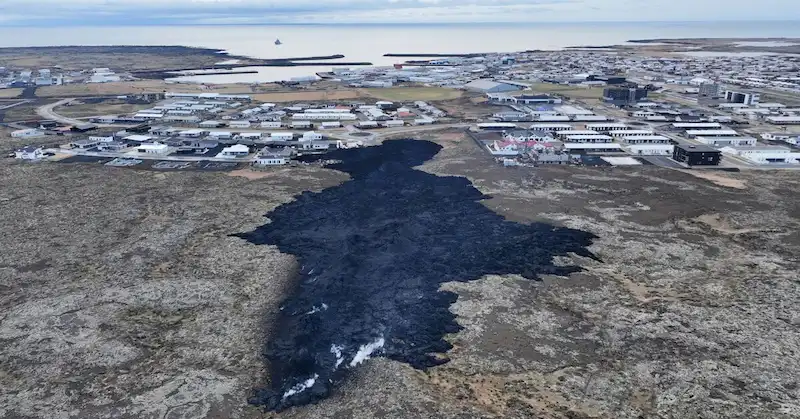


Iceland's government is facing the challenging task of aiding the residents of Grindavik, a town severely damaged by a volcanic eruption, while also mitigating the risk of an inflationary surge. The Prime Minister, Katrin Jakobsdottir, and her cabinet are actively working on a plan to compensate the displaced townsfolk, who comprise 1% of the country's population, for their now uninhabitable homes. Volcanic activity, which began in late 2023 near the town, has resulted in thousands of tremors, earthquakes, and two volcanic eruptions. These natural disasters have caused significant damage to infrastructure, such as roads, power lines, and water pipes, and have rendered the area unsafe for habitation.
The government's priority is to find new homes for the affected residents and provide compensation for their lost properties. However, Jakobsdottir acknowledges the potential inflation risks involved in implementing such a plan. Drawing from historical precedent, she cites the eruption in the Westman Islands in 1973, which triggered a surge in inflation. In order to maintain price stability, the government aims to address the situation in a manner that will not jeopardize the country's inflation targets.
Inflation in Iceland is already a pressing concern, with the latest reading standing at 7.7%, more than triple the central bank's target. The housing market is strained, and the central bank has raised interest rates to 9.25% to combat inflationary pressures. There are also concerns that upcoming pay deals could fuel a wage-price spiral. Adding to these challenges is the lack of investment in residential property following the country's financial crisis 15 years ago. Furthermore, the growth of tourism as a vital contributor to the nation's economy has exacerbated the strain on housing.
To address the current crisis in Grindavik, the government plans to present a proposal to parliament in February. The proposal includes options to either purchase all residential housing in Grindavik or compensate residents based on the equity they hold in their houses. Residents would be required to return the funds if they choose to move back to the town at a later date. Additionally, the government is exploring the possibility of sourcing pre-fabricated housing and has already acquired or is in the process of purchasing 260 apartments.
Restrictions may also be placed on short-term rentals, which have proliferated due to the booming tourism industry, to encourage the utilization of these properties as residences. Asrun Helga Kristinsdottir, the chairwoman of Grindavik's city council, stresses the urgency of the situation, stating that finding apartments is extremely difficult and rental prices are exorbitant. The displaced residents of Grindavik have scattered across the country, seeking temporary accommodations with relatives, in summer houses, or even in trailers during the harsh Icelandic winter.
The government's efforts to address the plight of the affected residents are commendable, but the challenge lies in navigating the potential inflationary consequences while ensuring the stability of the economy. This delicate balancing act requires careful planning and consideration to ensure that both the townsfolk of Grindavik and the nation as a whole can recover from this unprecedented natural disaster.