


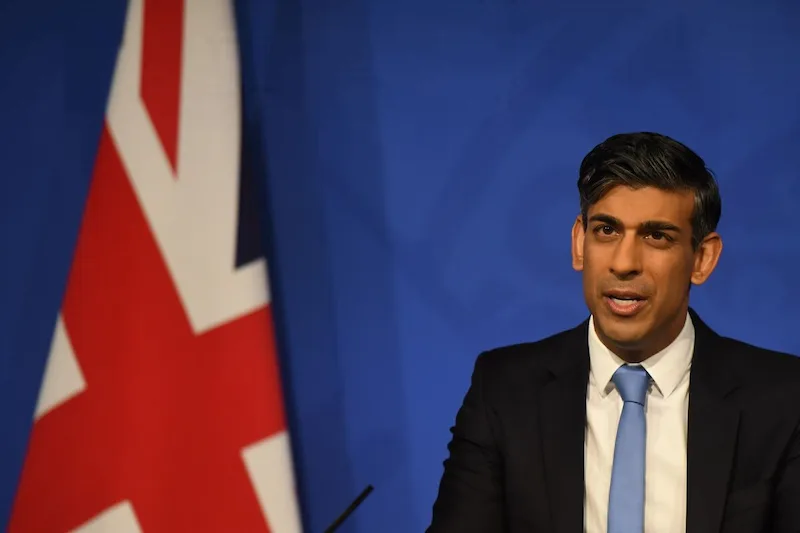


In a move to allow for more time to resolve a dispute with the Democratic Unionist Party (DUP), the UK government, headed by Rishi Sunak, plans to extend the deadline for restoring the Northern Ireland assembly until February 8. This extension would prevent the need for fresh elections.
Northern Ireland Secretary Chris Heaton-Harris announced that a bill will be presented to Parliament on Wednesday to facilitate this extension. The aim is to provide sufficient time for reaching a resolution between the government and the DUP, which has been boycotting the assembly for nearly two years. The party's boycott stems from its opposition to Westminster-led efforts in managing post-Brexit border controls across the Irish Sea.
The DUP, known for advocating closer ties with Great Britain, has consistently rejected several attempts made by both Sunak's government and Brussels to alleviate trade barriers arising from the UK's departure from the European Union. Their rejection of the Windsor Framework, agreed upon by Sunak last year with Brussels, and subsequent refusal to accept various incentives offered by Westminster, including a significant financial package amounting to £3.3 billion ($4.2 billion), has further strained negotiations.
By extending the deadline for restoring the Northern Ireland assembly, the UK government hopes to foster an environment conducive to finding a mutually agreeable solution. It is anticipated that this additional time will allow for meaningful dialogue and the exploration of alternative options that would address the concerns of the DUP.
The decision to extend the deadline emphasizes the significance the UK government places on restoring stability and ensuring effective governance in Northern Ireland. Avoiding snap elections is seen as crucial in maintaining the delicate balance of power and stability in the region.
While the extension of the restoration deadline provides an opportunity to resolve the ongoing dispute, the path to a resolution remains challenging. The UK government will need to navigate the concerns and demands of the DUP, finding common ground that serves both the interests of the party and the broader needs of Northern Ireland as a whole.
As discussions continue, there is hope that a compromise can be reached before the new deadline of February 8. The push for a resolution is not only vital for the stability of the assembly but also for the overall progress of post-Brexit governance. Both sides will need to demonstrate flexibility and a willingness to find a mutually satisfactory outcome that safeguards the interests of all parties involved.