


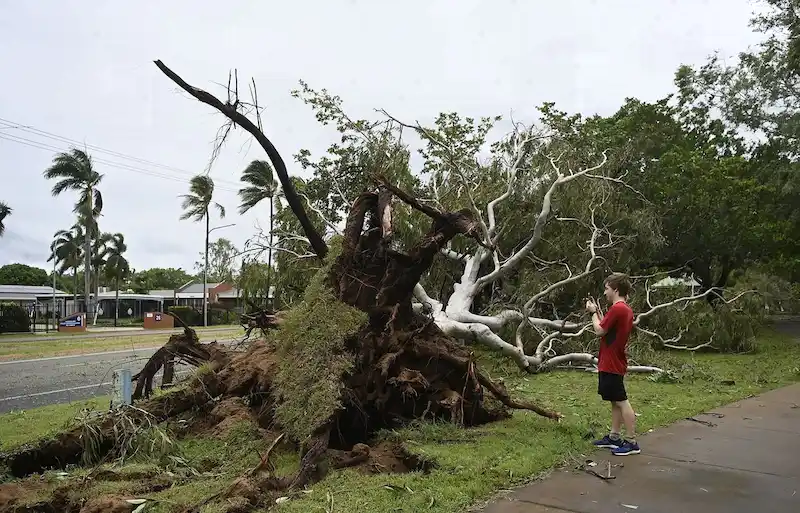


Southeast Australia braces for extreme weather conditions this weekend as parts of the region face scorching temperatures, while other areas prepare for heavy rain, flooding, and damaging winds. In Victoria state, thermometers are set to soar as high as 43C (109.4F), prompting heatwave warnings. Similarly, New South Wales is under a heatwave alert for 11 districts. Meanwhile, ex-Tropical Cyclone Kirrily is expected to bring torrential downpours and potential flooding as it moves towards western Queensland.
The Bureau of Meteorology has indicated that the peak temperatures on Sunday will depend on the timing of a trough passing through Southeast Australia. The hot weather is expected to persist along the New South Wales coast until early next week before a cooler change brings some relief. Authorities are urging residents to take precautionary measures and stay hydrated during this period of intense heat, as well as to remain alert to the heightened risk of fire.
As ex-Tropical Cyclone Kirrily heads towards western Queensland, heavy rainfall is anticipated in some regions, with as much as 200 millimeters (7.9 inches) expected. With the potential for this deluge to cause flooding, authorities are closely monitoring the situation and urging residents to be prepared and take necessary safety precautions. Additionally, damaging winds associated with the system could pose a threat to properties and infrastructure in affected areas.
Furthermore, the Bureau of Meteorology has warned of an increasing chance of a tropical cyclone forming in the Coral Sea by the middle of next week. While the system may approach the Queensland coast, its path remains uncertain, leaving considerable room for speculation. Authorities and residents are being advised to stay updated with the latest forecasts and heed any warnings issued in their respective regions.
Extreme weather events like these highlight the volatile nature of Australia's climate, which has experienced intense heatwaves, widespread bushfires, and devastating floods over recent years. The country's vulnerability to such extreme weather conditions underscores the importance of proactive measures, including robust disaster preparedness and adaptive infrastructure, to mitigate risks and protect lives and property.
As Australia continues to grapple with these weather challenges, it serves as a reminder for governments, communities, and individuals to prioritize climate change mitigation and adaptation strategies. By investing in sustainable practices, implementing effective emergency response plans, and fostering resilience, Australia can better navigate the evolving climate landscape and protect its citizens from the adverse impacts of extreme weather events.