


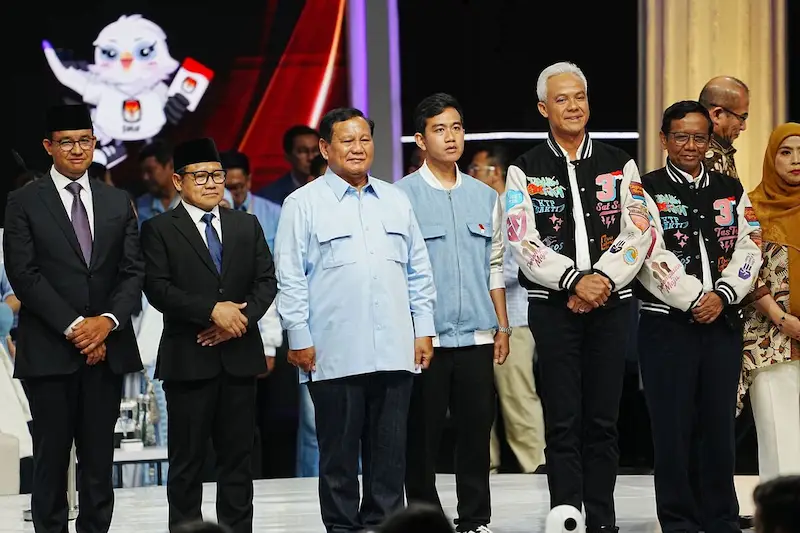


In the final televised debate before Indonesia's presidential election on February 14th, one of the three candidates, Ganjar Pranowo, announced his intention to review the country's job creation laws. Pranowo, a former governor of Central Java, stated that he had received complaints from labor groups, who are seeking changes to laws that they believe sideline workers on important issues such as severance pay, wages, and leave.
The incumbent President Joko Widodo's Job Creation Law is a significant aspect of his administration's legacy. The aim of the law is to streamline regulations and make them more appealing to investors. However, it has faced criticism from labor unions and environmental groups, who argue that it undermines workers' rights. Pranowo's promise to review these laws could signal a potential shift in policy towards greater protection for workers.
In contrast, another presidential candidate, Prabowo Subianto, a former military general and son-in-law of the late Indonesian President Suharto, did not address labor issues in his speech during the debate. However, Anies Baswedan, the former governor of Jakarta, emphasized the need to create jobs for the 45 million individuals residing in remote cities, where opportunities are limited.
Aside from labor concerns, Pranowo, who is supported by the ruling Indonesian Democratic Party of Struggle, also pledged to reinstate the requirement for the state to allocate 5% of its budget to healthcare. This commitment highlights the importance of prioritizing public health and ensuring access to quality medical services for the population.
The distribution of social assistance was another topic of discussion during the debate, with Anies criticizing the current method of distribution, which he described as being done on the "side of the road" and influenced by specific interests. Pranowo agreed with this sentiment, emphasizing the state's responsibility to uphold social justice and ensure that assistance reaches the intended recipients in a timely and efficient manner.
As the election approaches, more than 204 million eligible Indonesian voters will decide the next leaders who will shape the country's largest economy for the next five years. The outcome of the election will also be closely monitored by foreign investors, as they assess whether the new government will continue or diverge from the policies and reforms implemented under President Joko Widodo's administration.
Prabowo currently holds a considerable lead in the polls, having capitalized on his selection of Gibran Rakabuming Raka, President Widodo's eldest son, as his vice presidential candidate. However, President Widodo has faced criticism for allegedly attempting to create a political dynasty and revive the era of nepotism and cronyism. Consequently, the upcoming election will not only determine the country's future direction but will also carry significant implications for transparency, democratic governance, and equality in Indonesian politics.