


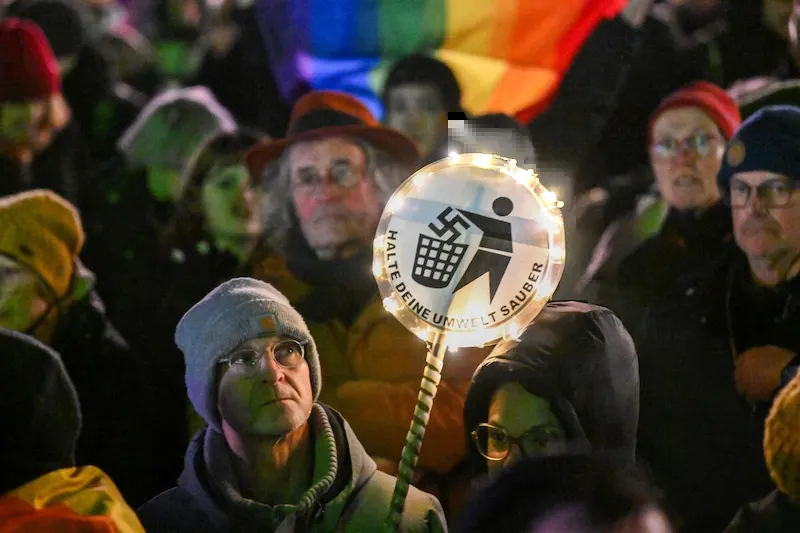


Voter support for Germany's far-right party, Alternative für Deutschland (AfD), has reached its lowest point since July, as the party continues to experience a gradual decline in its popularity. This downward trend can be attributed to the recent uncovering of a "re-migration" plan that bears eerie echoes of Nazi ideologies, sparking widespread protests across the country. According to a survey conducted by INSA for Bild am Sonntag, the AfD currently enjoys the support of 20% of voters, marking a one percentage point drop from the previous week's figures.
In response to the revelations of the AfD's controversial plan, hundreds of thousands of citizens have joined pro-democracy and anti-right wing demonstrations once again over the weekend. While the party continues to reel from the January reports, its current level of support remains only slightly lower than its peak of around 23%. However, it is crucial to note that despite this decline, the AfD still remains as Germany's second-strongest political force.
On the other hand, Germany's Chancellor Olaf Scholz's Social Democratic Party (SPD) has experienced a slight boost in support, with an increase of one percentage point to reach 15% in the past week, according to the INSA survey. The poll also revealed that the pro-business Free Democratic Party (FDP), led by Finance Minister Christian Lindner, has remained steady at 4%, falling below the threshold required to secure a place in parliament in the next election. Meanwhile, the Green Party's support has remained unchanged at 13%.
The political landscape in Germany is currently characterized by widespread frustration with Chancellor Scholz's coalition, which includes the Green Party. A deteriorating economy has further exacerbated discontent among the populace, leading to a rise in support for new political parties. One such party is the Sahra Wagenknecht Alliance (BSW), which has managed to maintain the support of 7% of voters in the recent INSA survey. The BSW is a breakaway group from Die Linke (the Left) and is now preparing to make its presence felt in the upcoming European elections.
As Germany confronts these shifting political dynamics, it becomes evident that the far-right AfD's support has taken a significant hit due to the exposure of its controversial plans, triggering mass demonstrations and further eroding its public appeal. Meanwhile, Chancellor Scholz's SPD and newer parties like the BSW are experiencing slight gains in support. With discontent growing and the economy worsening, it remains to be seen how the political landscape in Germany will evolve in the coming months.