


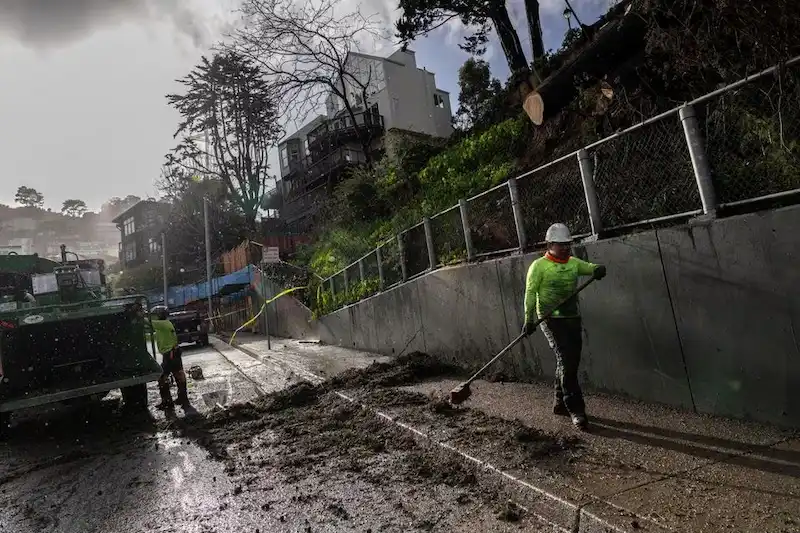


California was hit by a devastating storm, the second in a week, which brought heavy rainfall and strong winds to the state. As a result, more than half a million homes and businesses were left without power. PowerOutage.us reported that 516,000 electric customers were affected by the outages statewide.
The storm, known as an atmospheric river or Pineapple Express, wreaked havoc across California. The electric utilities struggled to restore power as the storm battered the state with hurricane-force winds and torrential rain. Pacific Gas and Electric Co (PG&E), the state's largest utility company, reported about 500,000 customers without electricity. However, they managed to restore power to over 565,000 customers.
In response to the extensive damage caused by the storm, California Governor Gavin Newsom declared a state of emergency in eight counties, which together have a population of over 20 million people. The affected regions were urged to remain cautious and vigilant due to potential hazards such as weakened trees, flooding, and downed powerlines.
The storm's impact on the power grid was also reflected in the surge in base power prices at California's SP-15 hub. Prices spiked to $63.35 per megawatt-hour (MWh), the highest in over a week. This further signifies the scale of the disruption caused by the storm and the challenges faced by the power sector in California.
The torrential rain also resulted in severe flash flooding, prompting the issuance of flash flood warnings in areas like Los Angeles, Santa Barbara, and San Luis Obispo counties. The U.S. National Weather Service's Los Angeles office revealed that Sunday was the city's third wettest day in February since 1877. The situation was deemed highly risky, with concerns about life-threatening and damaging flooding persisting until Tuesday afternoon.
As the storm subsides, the focus will shift towards recovery efforts, including restoring power to the remaining affected customers and assessing the extent of damage caused by the heavy rainfall and strong winds. The resilience of the affected communities and the swift response and restoration efforts by utility companies will play a crucial role in ensuring a prompt recovery from this destructive storm.