


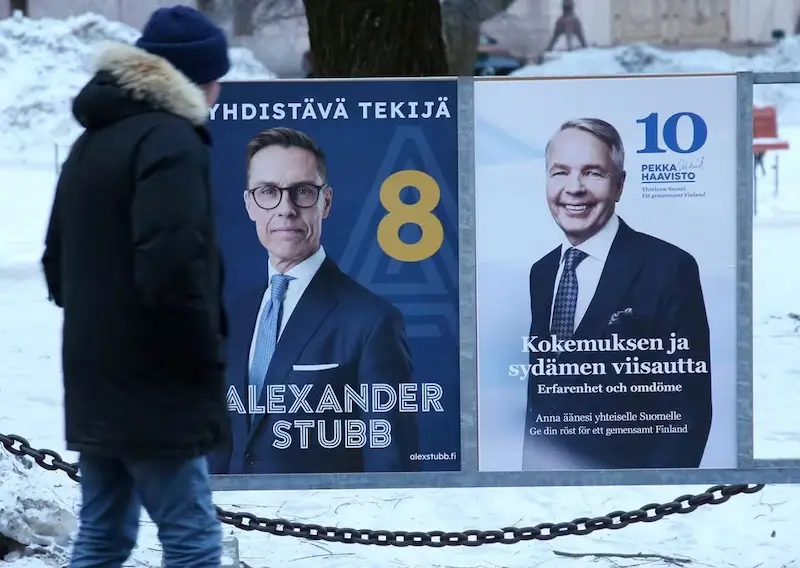


Alexander Stubb, of the centre-right National Coalition Party, has secured victory in Finland's presidential election, narrowly defeating Pekka Haavisto of the liberal Green Party. Haavisto gracefully conceded defeat after Stubb secured 51.6% of the votes, according to the justice ministry's data with 99.7% of the ballots counted. Stubb, a pro-European politician with a tough stance towards Russia, declared his win in the run-off vote, calling it the greatest honor of his life.
As Finland's new head of state, Stubb will be responsible for shaping the country's security and foreign policies, including its stance towards Russia, with which it shares a long border. In his televised remarks, Stubb expressed calmness, humility, and immense gratitude for being elected as the President of the Republic of Finland. Having previously served as prime minister, Stubb emerged as the frontrunner in the first round of voting on January 28, securing 27.2% of the vote.
Haavisto, acknowledging Stubb as the 13th president of Finland, congratulated him and expressed confidence in his competency for the job. This peaceful transition of power marks a new era for Finland, a country that historically focused on fostering diplomacy, particularly with neighboring Russia, and opted against joining military alliances to maintain a delicate balance between Moscow and NATO.
However, Finland's perspective shifted dramatically following Russia's invasion of Ukraine in 2022. The country swiftly changed its stance and joined NATO in April of the following year, seeking the security umbrella provided by the Western alliance. With Finland now under NATO's protection, Stubb, who will succeed Sauli Niinisto, will play a central role in defining the country's NATO policies. He will also lead Finland's overall foreign and security policy in close collaboration with the government and act as commander-in-chief of the armed forces.
The main challenge facing the new president lies in managing Finland's relationship with Russia. Lauri, a 36-year-old IT worker who voted in Helsinki, highlighted the tense situation, stating that Russia poses the biggest threat and issue Finland currently faces. Stubb has made it clear that there will be no political relations with the Russian leadership until the war in Ukraine ceases. He advocates for deep NATO cooperation, including the transport of nuclear weapons through Finnish soil and the potential permanent placement of NATO troops in Finland. However, Stubb does not support storing nuclear weapons in Finland.
Russia has previously threatened Finland with retaliation in response to its NATO membership and a defense cooperation agreement signed with the United States in December. Stubb's victory signifies Finland's continued commitment to its new NATO membership and firmly aligning itself with the Western alliance.
Warm congratulations have poured in for Stubb from neighboring countries, such as Swedish Prime Minister Ulf Kristersson, who emphasized the close friendship and partnership between Finland and Sweden. As Stubb assumes his role, all eyes will be on him as he navigates the challenging geopolitical landscape and shapes Finland's future in the global arena.