


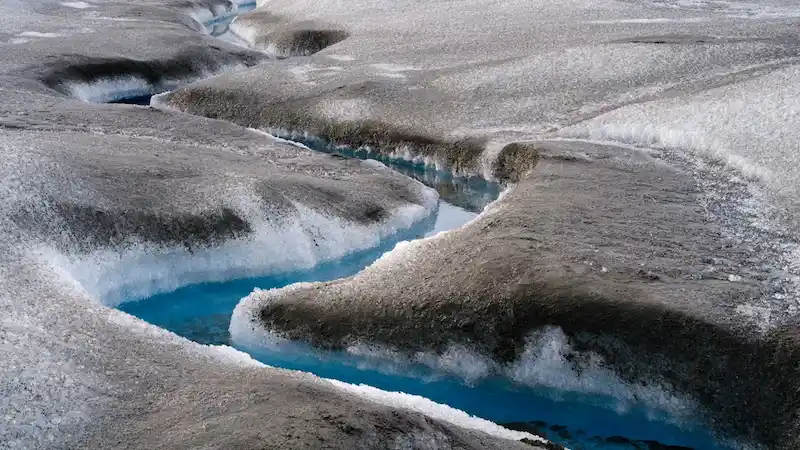


In a groundbreaking study published on Tuesday, researchers have revealed that the area of ice loss in Greenland over the past three decades is a staggering 36 times the size of New York City. This loss of ice has resulted in the rapid transformation of once-frozen landscapes into wetlands and shrub areas. The study, which analyzed satellite imagery, found that the amount of vegetation in Greenland has doubled since the mid-1980s, while wetlands alone have quadrupled in size.
The primary driver behind this unprecedented ice loss is the rising air temperatures caused by climate change. As the ice melts, land temperatures rise, exacerbating the problem as it leads to the melting of permafrost—a frozen layer beneath the Earth's surface that is prevalent in the Arctic regions. This permafrost melt releases significant amounts of carbon dioxide and methane, two potent greenhouse gases that contribute to further global warming. Moreover, the melting permafrost destabilizes the land, posing a threat to infrastructure and buildings.
The consequences of ice loss in Greenland are not limited to carbon emissions and land instability. The loss of ice creates a feedback loop—a cascade of interconnected impacts. As snow and ice dissipate, areas that were once reflective now absorb more solar energy, leading to increased land surface temperatures. This, in turn, results in further ice melt and a host of negative consequences. The increased water from melting ice also raises the temperatures of lakes, as they retain more heat than snow, adding to the rising land surface temperatures.
Greenland, the world’s largest island, has been warming at twice the global rate since the 1970s. The study's authors warn that more extreme temperatures are likely in the future. With a population of around 57,000, Greenland is home to many indigenous communities who heavily rely on the island's natural ecosystems for their livelihoods. The changes brought about by ice loss are particularly concerning for these communities. The flow of sediments and nutrients into coastal waters can disrupt the region's fishing industry, which is crucial for both indigenous populations and other parts of the island that rely on hunting.
Furthermore, the loss of ice mass in Greenland has a significant global impact—it contributes to rising sea levels. This trend poses ongoing challenges not only to the island's inhabitants but also to coastal communities worldwide. As sea levels rise, coastal areas face increased risks of flooding and other detrimental consequences.
The findings of this study emphasize the urgent need for collective action to address climate change and its consequences. The drastic ice loss in Greenland serves as a stark reminder of the widespread impacts that result from global warming. It highlights the importance of reducing greenhouse gas emissions, implementing sustainable practices, and protecting the delicate ecosystems that are vital for the livelihoods and survival of communities both locally and globally.