


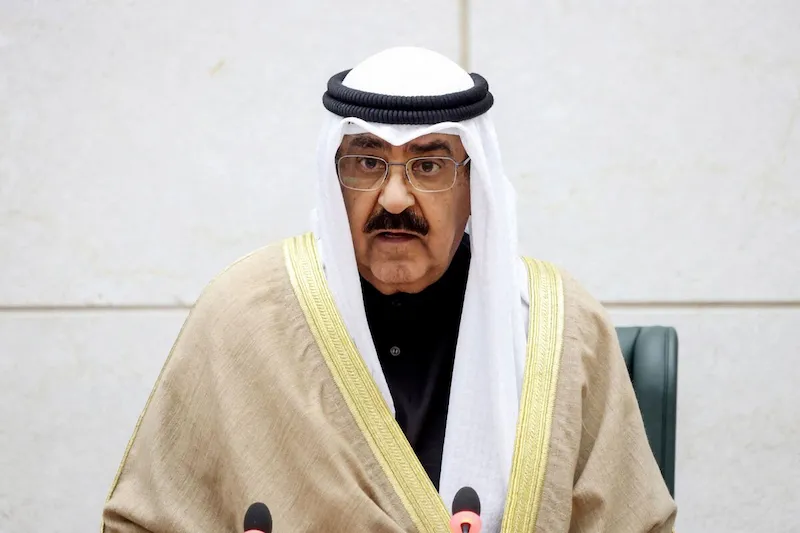


Kuwait's ruler, Sheikh Mishaal Al-Ahmed Al-Sabah, has dissolved parliament for the third time since June 2022 after lawmakers used offensive language that violated the country's constitution. This move highlights the ongoing political dysfunction that has hindered development, discouraged foreign investment, and impeded efforts to diversify the oil-reliant economy.
The decree issued by Sheikh Mishaal cited "unrestrained, insulting language" that failed to respect the emir's position. The catalyst for this decision was recent comments made by lawmaker AbdulKarim Al-Kandari, which were deemed offensive to the emir. It is worth noting that Sheikh Mishaal recently assumed office following the death of his half brother.
Tensions escalated further when legislators voted against deleting the offensive remarks from parliamentary records earlier this week. In response, the government chose not to attend Wednesday's session, heightening the rift between the executive and legislative branches.
The decree to dissolve parliament is based on Article 107 of the Kuwaiti constitution, which stipulates that elections should take place within two months of the decree's implementation. Criticism of the ruler's actions or decisions is strictly prohibited by the country's constitution.
Some experts argue that this dispute could have been resolved behind closed doors with proper coordination between both branches of government. Bader Al-Saif, an assistant professor at Kuwait University and a non-resident fellow at the Arab Gulf States Institute in Washington, pointed out the potential for a short-lived government, emphasizing the need for optimal coordination.
Sheikh Mishaal has been actively working to redefine Kuwait's course after years of challenges. Earlier this year, he appointed Sheikh Mohammed Sabah Al-Salem Al-Sabah as the new prime minister. The 68-year-old economist, who holds a doctorate from Harvard University, is expected to navigate the country towards economic development. Nonetheless, this new cabinet marks the sixth to be formed in less than 18 months.
Kuwait remains a crucial ally of the United States in the Middle East, being one of the world's largest oil exporters and home to a sovereign wealth fund valued at over $700 billion. It is also noteworthy that Kuwait has the only elected parliament within the Gulf Cooperation Council (GCC).
The dissolution of parliament underscores the ongoing political challenges faced by Kuwait, hindering progress and stability. As the country prepares for upcoming elections, it remains to be seen how the political landscape will unfold and whether efforts to address economic development and diversification will be effectively pursued.