


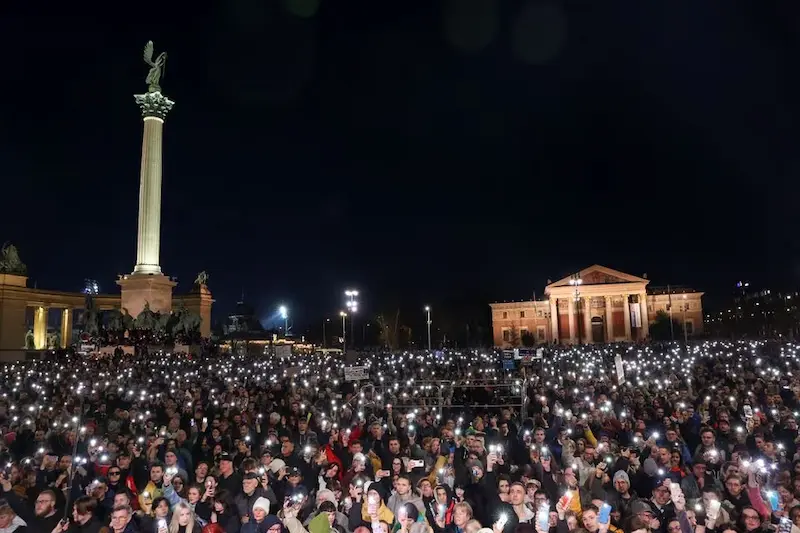


Tens of thousands of Hungarians took to the streets of Budapest on Friday in what is being hailed as one of the largest protests against Prime Minister Viktor Orban's government in years. The rally was sparked by public outrage over a recent sex abuse case pardon by President Katalin Novak, which ultimately led to her resignation. This scandal has resulted in a major political shakeup, with two key allies of Orban stepping down from their positions. While the immediate impact on Orban's rule may be limited, the timing of the controversy is crucial, as European parliament elections are scheduled for June, and Orban's party hopes to capitalize on the rising support for far-right parties across Europe.
The catalyst for the protests was the revelation of a pardon granted to a man involved in covering up sexual abuse in a children's home. The news caused an uproar among the public and sparked the call for a protest by nine influential online influencers, including popular singer Azahriah. The demonstration took place in Budapest's historic Heroes' Square, attracting an impressive turnout of tens of thousands of people, primarily consisting of young individuals. The square quickly became packed with protestors, and the surrounding avenues were filled with even more participants, forming a powerful display of dissent against the government.
The protesters expressed their dissatisfaction with the current government, accusing it of deceit and hypocrisy. One protestor, Jozsef Molnar, explained that he participated in the rally not only for himself but also for the future generations. Dissatisfaction with the government's handling of various issues seems to be a driving force behind the protests. The organizers of the demonstration highlighted the importance of transparency, the protection of abuse victims, and honest public dialogue. They questioned how many more similar issues might have been covered up, emphasizing the need for a thorough examination of the situation.
The motivation behind the controversial pardon remains uncertain. Despite efforts by Orban's ruling Fidesz party to regain control of the narrative by claiming accountability for their mistakes, the public anger continues to grow. Orban himself is set to deliver a speech outlining his policy agenda in the coming days, adding further weight and scrutiny to the turmoil. His chief of staff, Gergely Gulyas, acknowledged that the president and former justice minister took responsibility for the issue, but maintained that the government considered the matter closed. Gulyas also stressed the importance of looking forward and promised stricter child protection regulations as a way to address the concerns raised.
While the ongoing scandal does not pose an immediate threat to Orban's leadership, it has significantly impacted the public's trust in his government. With the European parliament elections approaching and the rise of far-right support in Europe, the timing of the controversy poses a challenge for Orban and his party. The massive demonstration in Budapest serves as a stark reminder that the constituents of Hungary are demanding change, transparency, and accountability from their government.