


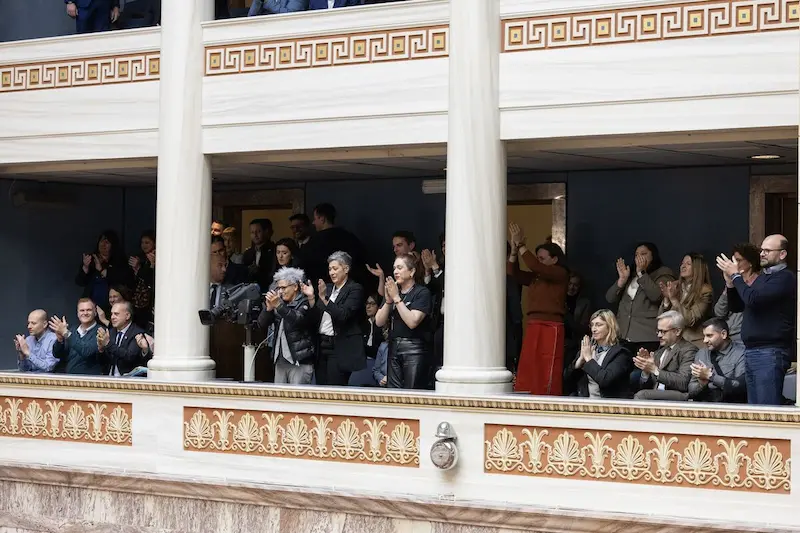


In a groundbreaking move, the Greek parliament has passed a historic law granting equal marriage rights and automatic parental rights to all citizens. Greece, as the first majority Christian Orthodox country to take this step, stands out in a region largely opposed to such progressive changes. This significant development has paved the way for same-sex couples to marry and adopt children, bringing hope and joy to countless individuals and families who have long yearned for recognition and acceptance.
For Stavros Gavriliadis and Dimitrios Elefsiniotis, who have been together for over two decades, this law is a monumental victory. Prior to its passing, they were unable to legally marry or have both of them recognized as parents to their three children. However, with the legislation now in effect, they eagerly await their upcoming nuptials. No longer will Gavriliadis fear that his son might become a ward of the state, or worry about being denied the right to pick up his twins from school. They will finally be recognized as a single, united family in the eyes of the law.
Prime Minister Kyriakos Mitsotakis, who championed this law as part of his efforts to modernize Greece, expressed his belief that marriage is simply the ultimate manifestation of love between two individuals who choose to commit to one another. He emphasized that this reform would improve the lives of many citizens without encroaching upon the lives of others. It is a step toward inclusivity, fostering an equal society where love and commitment are celebrated in all their forms.
Legalizing same-sex marriage is a significant milestone for Prime Minister Mitsotakis, who hails from a conservative party. Despite facing resistance from within his own party and the influential Greek Orthodox church, he managed to secure the support of the center-left and leftist opposition parties, ensuring the successful passage of the legislation. This demonstrates Mitsotakis's willingness to navigate political complexities and evolve with the changing times.
While activists and campaigners recognize the significance of this milestone, they also believe there is more work to be done. One particular point of contention is the exclusion of male same-sex couples from accessing surrogacy services within Greece. This limitation restricts the ability of gay couples to have children through surrogacy, an issue that remains controversial in many European countries where commercial surrogacy is discouraged.
The experiences of former UK Prime Minister David Cameron were cited as influential in Greece's decision to embrace same-sex marriage. Cameron, despite opposition from within his party and the church, successfully passed legislation legalizing same-sex marriage in the UK. This demonstrated that broader inclusion in the institution of marriage is not antithetical to conservative principles. In fact, it reflects a commitment to equality and recognition of evolving societal norms.
As Greece takes this monumental step forward, it serves as an inspiration for other nations grappling with the issue of same-sex marriage and LGBTQ+ rights. The passage of this law symbolizes progress, acceptance, and the unyielding spirit of love and equality. It signifies that change is possible, even in regions traditionally resistant to such transformations. Greece's decision to embrace same-sex marriage is a powerful reminder that love knows no boundaries and that every individual, regardless of their sexual orientation, deserves the right to love, marry, and build a family.