


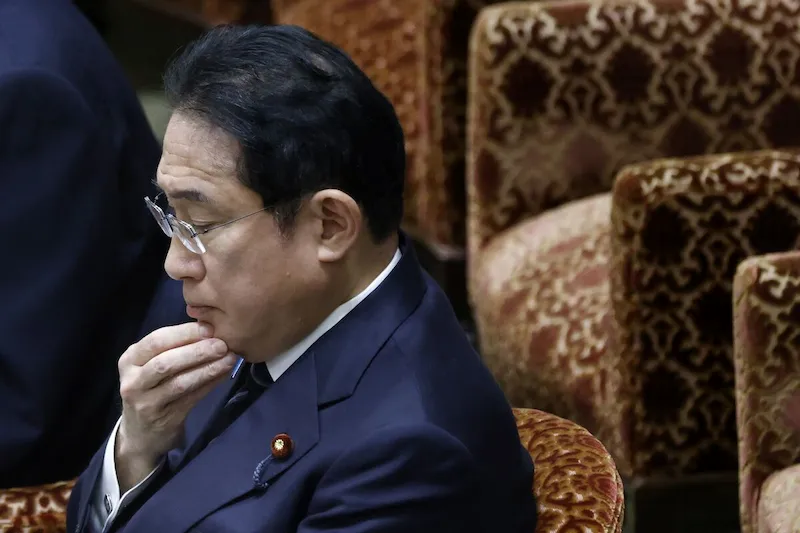


In a startling turn of events, Japanese Prime Minister Fumio Kishida is facing record levels of disapproval from voters, marking a significant setback for his leadership. Recent polls conducted by various newspapers paint a bleak picture for Kishida, with the Mainichi survey revealing an unprecedented 82% disapproval rate, the highest ever recorded for a sitting premier since the paper began its polling in 1947. His approval ratings also plummeted to a mere 14%, indicating a sharp decline in public confidence.
As Japan gears up for a crucial party leadership election in September, where the long-ruling Liberal Democratic Party will choose its next leader, Kishida finds himself under intense scrutiny. The fallout from a slush fund scandal that rocked the political landscape has left deep scars on Kishida's administration, leading to a series of arrests and indictments. Despite his efforts to address the issue by disbanding his faction within the party and urging others to distance themselves from financial improprieties, many voters remain dissatisfied with what they perceive as inadequate measures to tackle corruption within the LDP.
The complexity of the situation is further exacerbated by Kishida's handling of undeclared income among senior party members, a problem that continues to haunt the ruling party. Polls conducted by leading newspapers such as the Yomiuri reveal that a significant majority of respondents doubt the effectiveness of the steps taken so far to ensure transparency in resolving the scandal. Moreover, there is widespread skepticism regarding the explanations provided by party factions' leaders, with over 90% of respondents feeling that the explanations fall short of addressing the core issues at hand.
Amidst these challenges, Japan's economy unexpectedly slipped into recession, dealing a severe blow to Kishida's leadership and raising concerns about his ability to navigate the country through turbulent times. The resurgence of an earlier scandal involving the LDP's connections with a controversial South Korean-based religious group has only added to the Prime Minister's woes, prompting calls for the resignation of the education minister over alleged dealings with the sect.
Despite the mounting pressures and controversies surrounding Kishida's administration, opposition parties have so far failed to capitalize on the situation. Recent polls indicate that none of the opposition parties boast significant support, with most languishing in single figures. As the political landscape in Japan continues to evolve, all eyes are now on the upcoming party leadership election in September, which could potentially signal a dramatic shift in the country's political direction.