


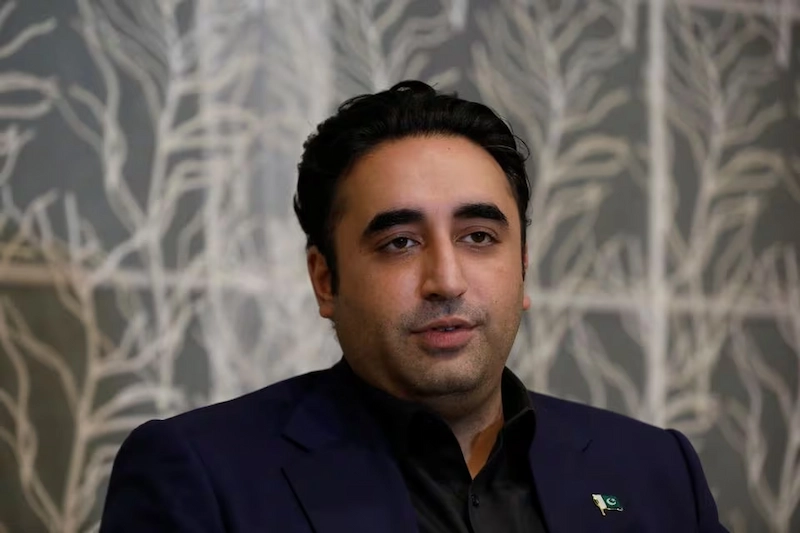


In a significant development in Pakistani politics, two of the country's major political parties have come to a formal agreement to form a coalition government. After days of intense negotiations following the inconclusive national election, the Pakistan Peoples Party (PPP) led by Bhutto Zardari and the Pakistan Muslim League-Nawaz (PML-N) of three-time Premier Nawaz Sharif have finalized their collaboration.
The announcement was made by Bhutto Zardari in a late-night press conference held in Islamabad, where he confirmed that the coalition's candidate for prime minister will be former premier Shehbaz Sharif. Additionally, he revealed that his father, Asif Ali Zardari, will be put forth as the alliance's candidate for the presidency of the country. The presence of Shehbaz Sharif, seated beside Bhutto Zardari, demonstrated the unity and determination of the two parties in the coalition.
Shehbaz Sharif, the younger brother of Nawaz Sharif, expressed confidence in the coalition's strength, pointing out that the combined seat tally of PML-N (79 seats) and PPP (54 seats), along with the support of four smaller parties, gives them a comfortable majority in the legislature with 264 seats. This solidifies their position to lead the government and make decisive choices for the nation's future.
The prolonged negotiations and uncertainty about the formation of a government had caused concerns amidst Pakistan's challenges. With an economic crisis looming, characterized by sluggish growth and soaring inflation, as well as a persistent threat of militant violence, the need for a stable administration capable of making tough decisions has never been more crucial. Bhutto Zardari emphasized the parties' commitment to expedite the process of government formation to address these pressing issues promptly.
According to the constitutional framework of Pakistan, a parliamentary session must be convened by February 29, followed by a vote for the new prime minister. With the alliance between PPP and PML-N solidified, the path is now clear for the establishment of a coalition government that aims to navigate the country through its current challenges and forge a path towards a more stable and prosperous future.