


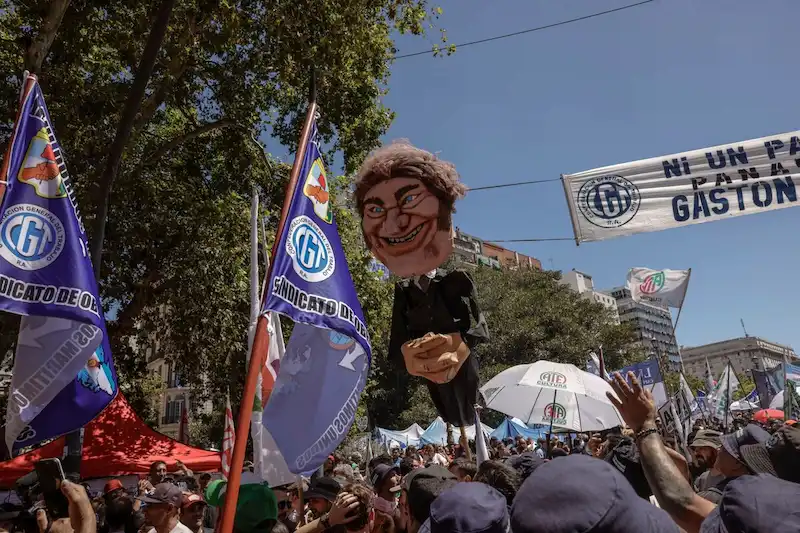


As Argentina navigates through a turbulent period of economic reforms under President Javier Milei, labor disruptions have surged, posing challenges to the government's austerity measures. The country witnessed a 24-hour strike in its train service, with more disruptions planned by healthcare workers and government employees in the coming days. These strikes are a visible demonstration of the growing resistance against President Milei's policies, which are impacting wages and pensions, leaving many Argentines grappling with income losses amidst soaring inflation rates.
President Milei's administration faces backlash from powerful unions in Argentina, with the umbrella group CGT leading a general strike in January, marking a significant protest against the government. While the administration has announced a 27% increase in social security by March, it falls short in alleviating the financial strains caused by inflation, which is currently at an annual rate of 254%. The gap between wage growth and inflation paints a stark picture of the economic challenges faced by the Argentine population under Milei's austerity measures.
Despite the recent fiscal surplus celebrated by investors, achieved through significant cuts in social security spending, concerns arise about the sustainability of such actions. Analysts warn that slashing essential social programs cannot be a long-term solution for economic stabilization. Milei's high approval ratings and international acclaim might not be enough to shield his government from the growing discontent on the ground as the reality of income losses and rising living costs become more apparent.
Looking ahead, the government anticipates heightened resistance in the upcoming months as unions demand pay raises and the new school year brings additional expenses for families. Milei's administration is also implementing price hikes in transportation and utilities while reducing subsidies, fueling the deficit. As the economic landscape evolves, the government is bracing for a potential surge in protests and strikes, testing the resilience of its austerity measures.
Amidst the escalating tensions, President Milei's administration remains steadfast in its commitment to the proposed economic reforms, indicating a willingness to take measures to address the striking workers. The government's stance reflects a determination to uphold its mandate despite the challenges posed by the growing dissent and disruptions in the country. As Argentina enters a critical phase of economic transformation, the clashes between government policies and public backlash underscore the complexities and uncertainties of navigating through a period of significant change.