


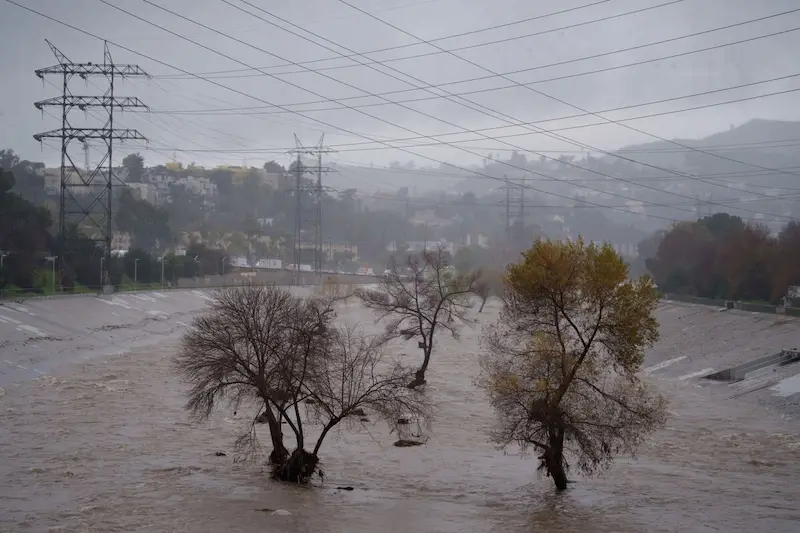


In the midst of a prolonged period of wet weather in California, Los Angeles finds itself under a looming threat of flash floods. A flash flood warning has been issued for downtown Los Angeles and its surrounding areas, set to persist through the early hours of Wednesday. This alert extends to other parts of the state as well, including San Diego and cities in the Central Valley. With the relentless rain continuing to drench the region, heightened vigilance and precautionary measures are paramount to mitigate potential risks and ensure the safety of residents.
Conversely, the opposite weather extremity grips regions across west Texas and eastern New Mexico. The US Storm Prediction Center has declared critical fire weather conditions due to high winds and arid air prevailing in the area. This volatile combination poses a significant threat, as any wildfires that ignite have the potential to rapidly spiral out of control. Though the affected area is sparsely populated, encompassing about 710,000 individuals in nearly 39,000 square miles, including El Paso, Texas, and Roswell, New Mexico—home to the mysterious Area 51—the imperative for prompt and effective fire prevention measures remains crucial.
Moreover, a vast expanse stretching from southeastern Colorado to the Mexico border has been placed under red flag fire warnings until Wednesday, as per the National Weather Service's forecast. Simultaneously, the eastern half of the United States braces for unseasonably warm temperatures through March 5, as projected by the US Climate Prediction Center. Expectations indicate that average daily temperatures may surge 8F (4C) degrees or more above normal across regions spanning the Great Plains, Ohio Valley, Mid-Atlantic, and Northeast until March 6. Correspondingly, Eastern Canada anticipates a milder conclusion to winter, as indicated by the Commodity Weather Group LLC.
Amidst global weather occurrences, Australia remains vigilant as meteorologists monitor the remnants of Tropical Cyclone Lincoln, currently traversing the Indian Ocean. The potential for re-strengthening looms large, with a flood watch in effect across sections of Western Australia. Potential landfall near Exmouth, Australia, is on the horizon, possibly as a Category 1 or 2 cyclone on the Australian intensity scale. The impending storm is forecasted to unleash its highest winds along a coastal stretch from Roebourne in the north to Ningaloo in the south within the upcoming days, warned meteorologist Angus Hines.
Furthermore, disruptive weather patterns have been witnessed in countries worldwide, with reports of hailstorms and isolated heavy rainstorms plaguing northern India. In Japan, a storm warning looms over Tsushima, underscoring the dynamic and unpredictable nature of global weather systems. As regions contend with divergent challenges ranging from flash floods to fire outbreaks, the importance of resilience, preparedness, and collaborative response mechanisms in tackling these weather-related adversities cannot be overstated.