


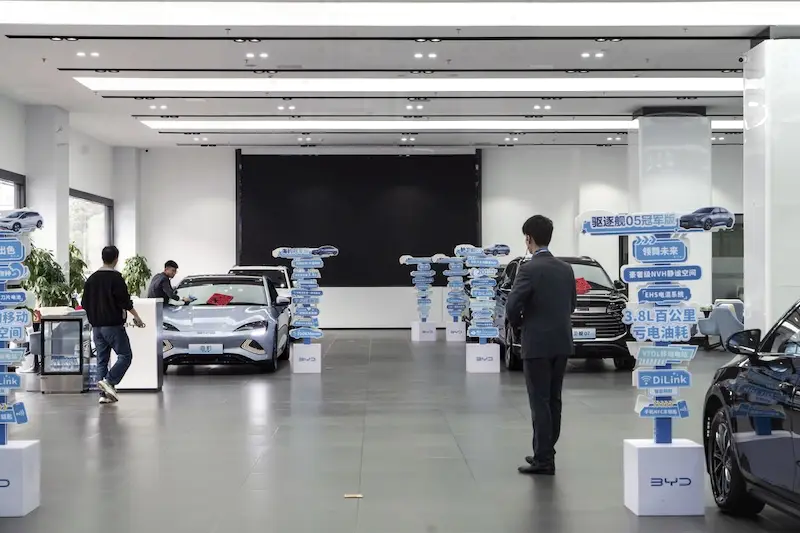


China's automotive industry is bracing for a slowdown in vehicle sales this month, as the Lunar New Year holiday and cautious consumer behavior dampen demand. Initial data from the China Passenger Car Association indicates that vehicle shipments are expected to decline by 15.7% in February compared to the same period last year. This drop in sales is primarily attributed to customers holding out for further price reductions and disruptions caused by the holiday season.
The price war initiated by leading manufacturers like BYD Co., who recently reduced the price of their Qin Plus sedan by 10,000 yuan, has inadvertently contributed to the decline in demand. Several other automakers have followed suit with price cuts, creating a market environment where customers are adopting a wait-and-see approach in anticipation of even greater discounts. This indicates a challenging period for the industry, as manufacturers have to strike a balance between attracting customers with reduced prices and maintaining profitability.
In addition to pricing strategies impacting sales, the electric vehicle (EV) segment in China is also facing setbacks. Reports of range anxiety among drivers, coupled with long waiting times at charging stations during the New Year holiday, have further dented EV sales. The China Passenger Car Association predicts a significant 43% decline in EV sales for February compared to January. These challenges highlight the need for the EV sector to address infrastructure and customer concerns to encourage wider adoption and sustainable growth.
Amidst this competitive landscape, some manufacturers are feeling the strain of low sales. Human Horizons Group Inc., a Shanghai-based company known for its premium HiPhi brand, has taken the unprecedented step of halting production for six months and closing stores due to underwhelming market performance. This move underscores the intense competition and dynamic nature of China's auto market, where brands must constantly innovate and adapt to meet evolving consumer demands.
As the industry navigates these challenges, it remains to be seen how manufacturers will adjust their strategies to stimulate demand and maintain their competitive edge in the Chinese automotive market. With consumer preferences shifting, regulatory changes impacting the sector, and technological advancements shaping the future of mobility, the coming months are crucial for automakers to drive growth and resilience in the face of market uncertainties.