


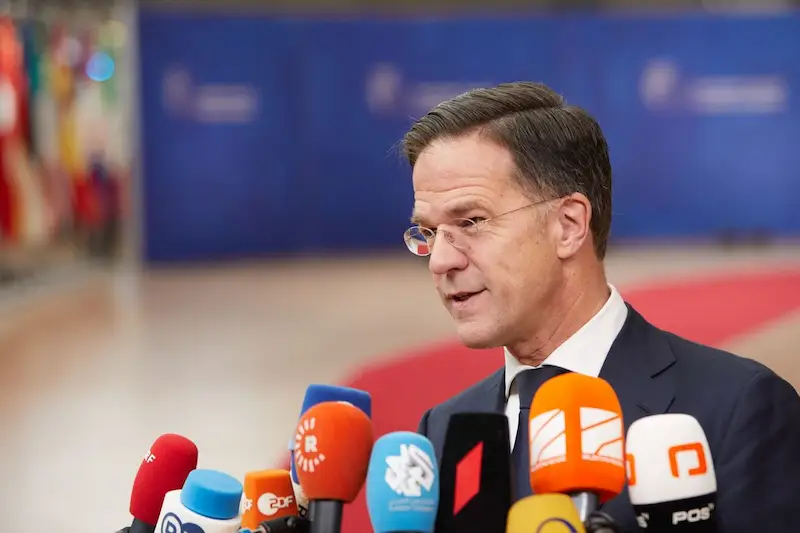


In a surprising move, Romania has informed fellow NATO members of its intention to nominate President Klaus Iohannis for the position of Secretary General within the defense alliance. This development has added a new layer of complexity to the ongoing efforts to appoint outgoing Dutch Prime Minister Mark Rutte as the next leader of the North Atlantic Treaty Organization. Despite this, Rutte continues to hold a strong position as the frontrunner for the role, with backing from influential countries such as the US, Germany, and the UK.
The push for Iohannis's nomination reflects a desire among some members on the alliance's eastern flank for increased representation from their region in senior positions within NATO. Previous leaders of the alliance have predominantly hailed from Nordic countries or the Netherlands, prompting calls for diversity in leadership. However, the likelihood of Iohannis ultimately securing the position remains uncertain, with the majority of support still favoring Rutte.
While Iohannis's press office has refrained from commenting on the matter, a spokesperson for Rutte emphasized that the decision on the next NATO Secretary General ultimately rests with the alliance's members. European and US officials view Romania's nomination as a potential delay in the selection process, expecting Rutte to emerge victorious in the end.
The endorsements of Rutte by prominent figures from the US and the UK, including the White House and the German embassy, have been interpreted by some within the alliance as a concerted effort to solidify Rutte's candidacy and close the door on other potential contenders. This public backing underscores a unified stance among key NATO allies in support of Rutte's bid for the leadership position.
Romania's assertion for greater representation from Eastern Europe in key roles within NATO reflects a broader sentiment among members feeling marginalized in the alliance's leadership. With the upcoming NATO foreign ministers meeting in April marking the alliance's 75th anniversary, the decision on Stoltenberg's successor is viewed as crucial in maintaining cohesion and effectiveness within the organization.
As the geopolitical landscape evolves, the next NATO Secretary General will play a pivotal role in navigating challenges such as the ongoing conflict between Russia and Ukraine. Balancing the need to prevent further escalation while upholding commitments to member countries will be a primary focus for the incoming leader. Romania's increased defense spending and commitment to NATO goals have been recognized, although considerations such as the country's current role as deputy secretary general and Iohannis's potential candidacy for other key positions pose additional factors for deliberation.