


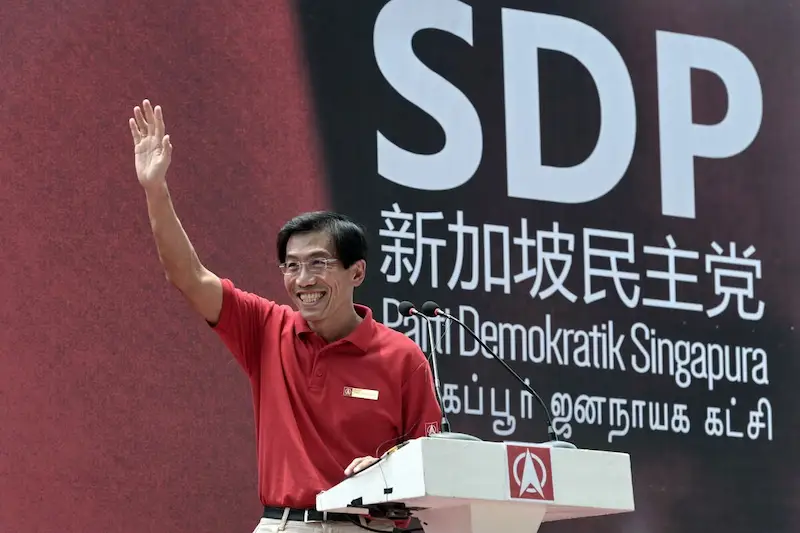


In a recent development that underscores the ongoing debate surrounding censorship and freedom of speech in Singapore, opposition politician Chee Soon Juan has become the latest target of the controversial fake news law. Chee, who serves as the Secretary-General of the Singapore Democratic Party, has been singled out for his comments regarding public housing policies in the city-state.
The Ministry of National Development has accused Chee of disseminating false and misleading information in a video posted on social media. As a result, Chee will be required to issue a correction to the video, ensuring that any inaccuracies are addressed and clarified. Additionally, social media platform TikTok Pte. will be obligated to share a correction notice with all users in Singapore who accessed Chee's post on their platform.
This move is just the latest in a series of actions taken by the Singaporean government under the fake news law, which was first enacted in 2019. The legislation has previously been used to target other opposition figures, including Progress Singapore Party's Leong Mun Wai and Reform Party's Kenneth Jeyaretnam. These instances raise questions about the balance between freedom of expression and the regulation of misinformation in a country known for its strict controls on public discourse.
Critics of the fake news law argue that it empowers the government to silence dissenting views and restricts the ability of opposition voices to hold those in power accountable. Proponents, on the other hand, maintain that such measures are necessary to combat the spread of misinformation, especially in an era dominated by social media and fake news proliferation.
As Singapore continues to navigate the complexities of regulating information in the digital age, the case of Chee Soon Juan serves as a reminder of the ongoing tensions between free speech and government control. The outcome of this latest incident is likely to fuel further debate and scrutiny over the implications of Singapore's fake news law on political discourse and public opinion.