


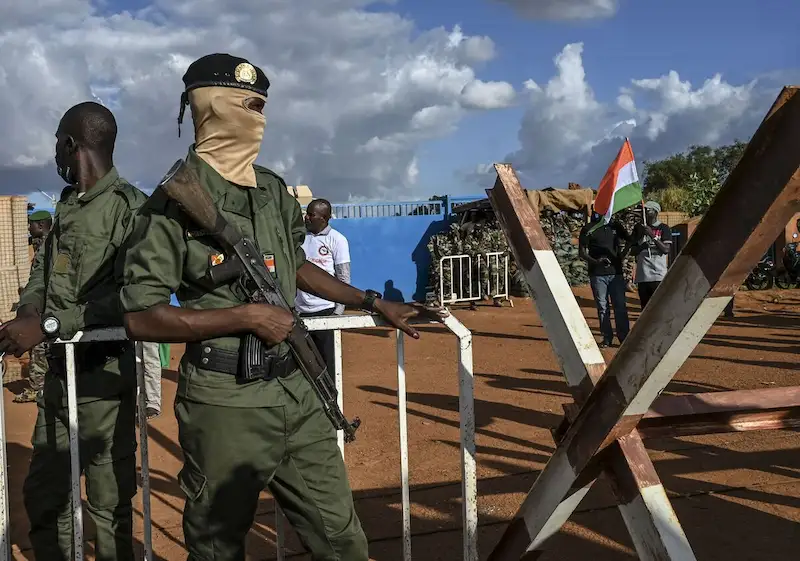


In a significant development, the Economic Community of West African States (Ecowas) has decided to lift the comprehensive sanctions imposed on Niger after a coup last year. The decision was announced by Ecowas Commission President Omar Touray following a meeting of regional leaders in Nigeria's capital, Abuja. The sanctions, which included the closure of land and air borders, suspension of trade, and freezing of assets, will be lifted immediately. This move comes as a relief to Niger, as the sanctions had severely impacted the country's economy and its population.
The decision to lift the sanctions was based on humanitarian considerations and in anticipation of a return to democracy in Niger. Ecowas has called for the immediate release of President Mohamed Bazoum, who was ousted in the coup. The bloc had imposed the sanctions with the aim of pressuring the junta to restore democratic governance and reinstate the elected president. However, the effectiveness of the sanctions was called into question as they caused significant hardship to the people of Niger without achieving the desired political outcome.
Niger had been grappling with shortages of essential supplies such as food, medicine, and electricity due to the border closures and Nigeria's decision to cut off power supply to the country. The impact of the sanctions was further exacerbated by the country's recent default on debt payments amounting to $24.2 million, adding to its already substantial debt of over $600 million since the coup. The lifting of sanctions is expected to provide some relief to Niger's economy and pave the way for a resolution to the political crisis.
The situation in Niger has broader implications for regional stability, given its strategic importance in the fight against militancy in West Africa's Sahel region. The country's new rulers have taken a defiant stance by refusing to relinquish power and cutting military ties with France and its neighboring countries. Niger's decision to withdraw from the regional bloc, alongside Mali and Burkina Faso, has further complicated the crisis. Ecowas has reiterated its commitment to a negotiated solution to the crisis and a swift return to democracy in the region.
In a surprising turn of events, Niger recently overturned a controversial anti-migration law, signaling a shift in its approach to migration policies. This decision has dealt a blow to Europe's efforts to stem the flow of African migrants reaching its shores. The evolving dynamics in Niger underscore the complexity of the challenges facing the region and the importance of concerted efforts by regional and international stakeholders to address them effectively.