


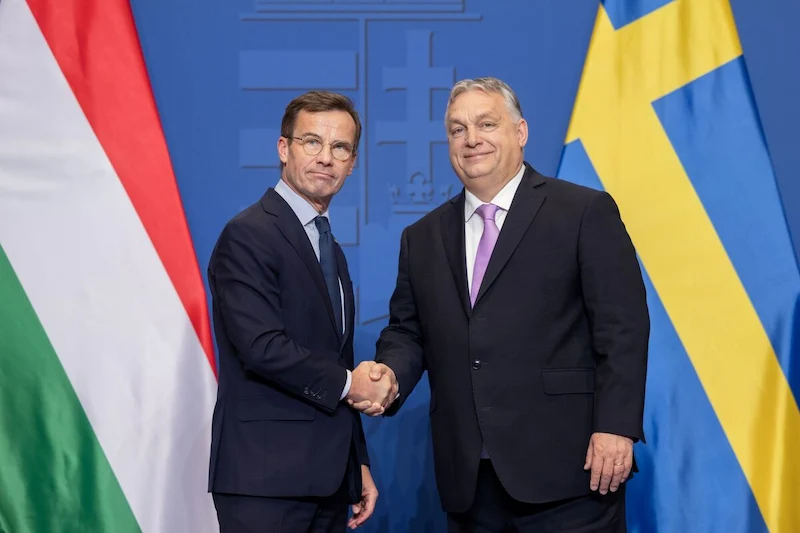


In a significant stride towards bolstering European security, Sweden has successfully cleared the final hurdle to gaining NATO membership following Hungary's parliamentary approval. This decision marks a pivotal shift for Sweden, a nation long affiliated with neutrality and non-alignment for over two centuries. Prime Minister Ulf Kristersson emphasized the gravity of this move, highlighting the natural progression in response to the evolving security landscape, especially amidst Russia's aggression and the ongoing conflict in Ukraine.
The timing of Sweden's accession into NATO comes at a crucial juncture, with concerns mounting over Russia's imperial ambitions and potential threats to the Baltic region. By solidifying its alliance with NATO, Sweden not only enhances its own security but also contributes to fortifying the defense of Northern Europe. This move strengthens NATO's presence in the Baltic Sea region and reinforces the alliance's eastern flank, offering a strategic advantage in deterring potential aggression.
The journey towards NATO membership for Sweden has been a challenging one, marked by negotiations and concessions, particularly in appeasing key allies like Turkey. However, Hungary's recent approval signifies a turning point in the process, solidifying Sweden's position within the alliance. The agreement also underlines the importance of unity and cooperation among NATO members in the face of shared security challenges.
Sweden's accession to NATO represents a significant milestone in the nation's military history, transitioning from a stance of neutrality to active participation in a collective defense framework. With a technologically advanced military and a robust defense industry, Sweden brings valuable capabilities to the alliance. This integration not only enhances NATO's deterrence capabilities but also fosters closer cooperation among neighboring countries in the Nordic region.
As Sweden prepares to formalize its NATO membership, the focus shifts towards strengthening defense capabilities and infrastructure to align with alliance standards. The nation's commitment to meeting NATO's spending goals and enhancing military readiness underscores its dedication to collective security. Amid evolving geopolitical dynamics and shifting global priorities, Sweden's alignment with NATO signals a proactive approach towards safeguarding regional stability and upholding shared values of freedom and security.
In the midst of uncertainties surrounding the US commitment to European security and growing geopolitical tensions, Sweden's decision to join NATO reflects a strategic move towards enhancing its defense posture and aligning with like-minded allies. As the geopolitical landscape continues to evolve, Sweden's integration into NATO offers a sense of solidarity and shared responsibility in facing emerging security challenges.