


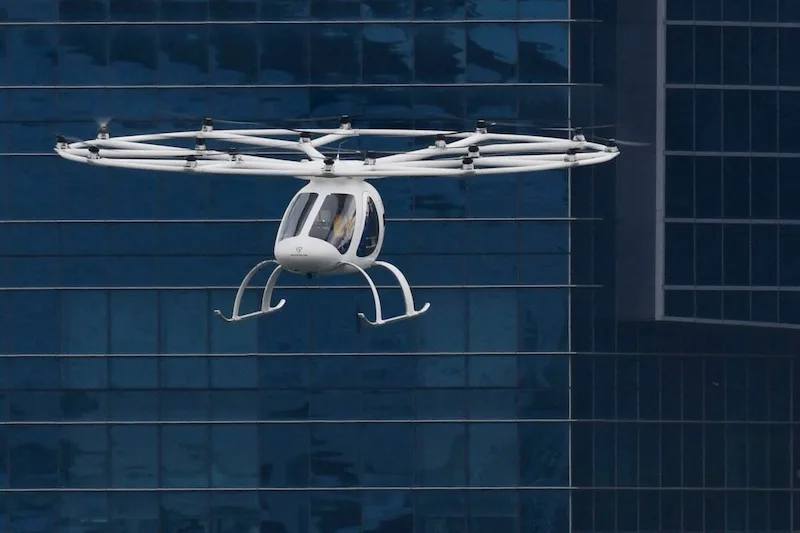


Amid mounting challenges, Volocopter GmbH's ambitious plan to transport Olympic attendees across Paris in air taxis during the upcoming summer games faces increasingly uncertain prospects. Despite CEO Dirk Hoke's optimism that the VoloCity copter could be ready for commercial service by the Games' start on July 26, the obstacles to securing regulatory approval and key components for the battery-powered aircraft loom ever larger.
The race against time to bring the all-new VoloCity craft into service while meeting stringent safety requirements has become a daunting task for the German air-taxi pioneer. Daily discussions with the European Union Aviation Safety Agency are ongoing, with Volocopter also working closely with suppliers to ensure that the necessary parts are approved for use in time for the Games. However, the unpredictability of the certification process remains a significant hurdle that could impact the launch schedule.
While the idea of spectators zipping between Olympic venues in futuristic air taxis has captured imaginations, recent setbacks within the industry highlight the complex nature of certification timelines faced by ambitious air-taxi startups. Incidents such as the crash of a Vertical Aerospace prototype in the UK and a Joby Aviation craft in the US serve as stark reminders of the real-world challenges and stringent safety standards that must be met before commercial operations can commence.
Volocopter's collaboration with EASA and close scrutiny of reports from similar incidents underscore the company's commitment to prioritizing safety in its operations. Despite criticisms of the stringent certification rules for eVTOLs, Volocopter's dedication to ensuring a safe and reliable aircraft has fostered trust with regulatory authorities.
In the face of supply chain disruptions caused by the pandemic, Volocopter continues to work diligently with parts manufacturers to navigate delays in electronic circuit boards and other essential components required for the VoloCity craft. These challenges have impacted engine production, further complicating the timeline for commercial launch.
Successfully launching passenger services during the Paris Olympics would provide a significant advantage to Volocopter in the competitive air-taxi market, positioning the company ahead of US rivals like Joby and Archer Aviation. Additionally, ongoing discussions with potential investors, including European carmakers, signal Volocopter's commitment to securing the necessary funding for future growth and expansion.
As the clock ticks towards the July Games, Volocopter remains focused on the goal of introducing its futuristic flying machines to a global audience. Whether the VoloCity craft is ready for commercial operations by July or during the Paralympic Games in late August, the company's dedication to safety, regulatory compliance, and innovation underscores its determination to revolutionize urban air mobility.