


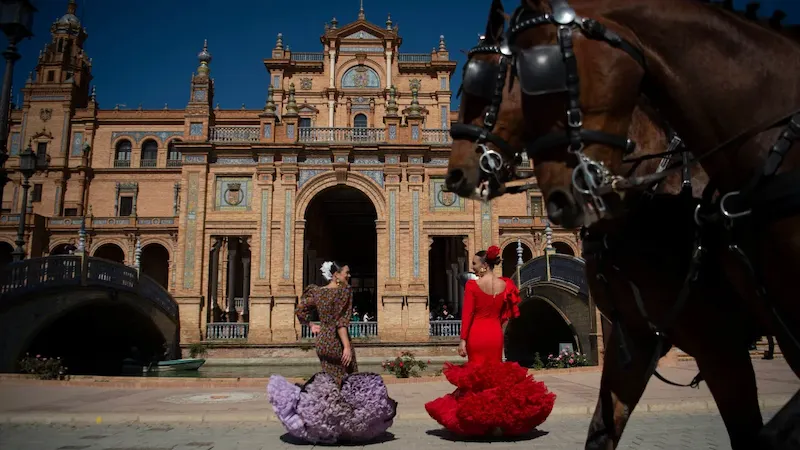


In a bid to combat overcrowding and maintain the beauty and integrity of one of its iconic landmarks, the city of Seville in southern Spain is considering implementing an entry fee for tourists visiting the Plaza de Espana square. This decision comes in response to the increasing strain on the popular tourist destination, with Mayor Jose Luis Sanz highlighting the urgent need for funds to finance the conservation efforts and ensure the safety of the historic site.
The Plaza de Espana, a striking Neo-Moorish architectural marvel, was originally built for the 1929 Ibero-American Exhibition and has since become a must-see attraction for visitors from around the globe. However, the square has suffered from wear and tear over the years, with missing tiles, damaged facades, and encroachment by street vendors detracting from its grandeur. By introducing an entry fee, city officials hope to generate the necessary resources to address these maintenance issues and preserve the square's cultural significance.
While the proposed fee would apply to tourists, local residents would still enjoy free access to the Plaza de Espana. Despite this, the announcement has sparked mixed reactions, with some Seville residents voicing concerns about the impact of mass tourism on their city. Calls for a broader tourism tax and better regulation of visitor numbers reflect the growing tension between the economic benefits of tourism and its impact on local communities.
Seville, renowned for its rich history, vibrant culture, and architectural splendor, has witnessed a surge in tourism in recent years, welcoming over three million visitors annually. As the third most visited city in Spain, Seville faces the challenge of striking a balance between catering to tourists and preserving its unique identity for residents. The decision to introduce an entry fee for the Plaza de Espana underscores the city's efforts to manage the tourist influx while safeguarding its heritage for future generations.
In a global context where iconic destinations grapple with overtourism and its repercussions, Seville's initiative reflects a growing trend toward implementing measures to protect cultural sites and mitigate the negative impacts of mass tourism. With cities like Venice also exploring strategies to manage visitor numbers, the debate over sustainable tourism practices continues to evolve, raising important questions about the delicate balance between economic growth and cultural preservation.