


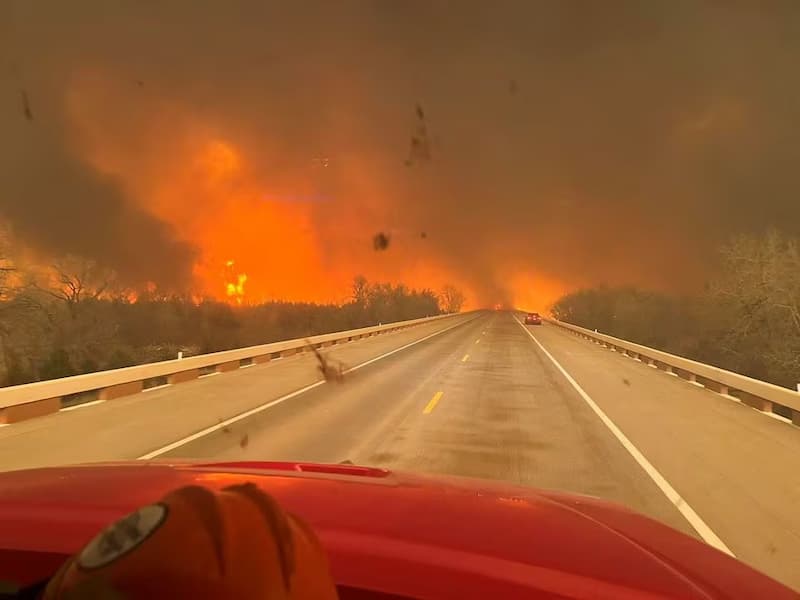


In a devastating display of nature's power, the ongoing wildfire ravaging the Texas panhandle has grown to be the largest in the state's history and is now among the biggest in U.S. history. With over 1 million acres consumed - an expanse almost the size of Delaware - and claiming the lives of at least two individuals, the sheer magnitude of this wildfire is both awe-inspiring and heartbreaking.
Experts attribute the increase in size, frequency, and intensity of wildfires to climate change. The rising temperatures and drier conditions created by climate change create a perfect storm for wildfires, allowing them to spread rapidly and burn fiercely. The impact of these wildfires goes beyond the immediate loss of life and property, extending to environmental damage and long-term consequences for communities affected.
One of the recent examples of such catastrophic wildfires is the August Complex fire in California in 2020. What began as multiple separate fires eventually merged into a colossal blaze between Napa and the Oregon border, scorching over 1 million acres. This particular fire surpassed the cumulative total of all California fires from 1932 to 1999, highlighting the unprecedented scale of destruction.
In 2021, the Dixie Fire in California followed suit, burning over 960,000 acres of land north of Sacramento. The fire, which started due to a tree falling on electrical wires, wreaked havoc on several towns in its path. This fire stands as the second largest in California's history, underscoring the ongoing threat that wildfires pose to communities in the state.
Looking back in history, the Peshtigo fire of 1871 in Wisconsin and the Great Michigan Fire of the same year in Michigan remain etched in memory as some of the largest and deadliest wildfires in U.S. history. These fires, fueled by a prolonged drought and strong winds, collectively burned millions of acres of forests and claimed thousands of lives. Among them, the Peshtigo fire stands out, having resulted in over 1,100 fatalities, highlighting the tragic toll wildfires can take on human life.
As we reflect on these monumental wildfires of the past, such as the Great Fire of 1910 that swept across Idaho, Montana, and Washington, claiming 87 lives and consuming 3 million acres in just two days, it is a stark reminder of the enduring threat posed by wildfires. The Great Fire of 1910 serves as a testament to the rapid and destructive potential of wildfires, especially when fueled by climatic conditions conducive to their spread.
In the face of these escalating wildfires and their staggering impact on lives and landscapes, it becomes increasingly crucial to address the underlying factors contributing to their severity. Climate change mitigation, wildfire prevention strategies, and community preparedness are vital components in mitigating the risks posed by wildfires and safeguarding both lives and ecosystems from their destructive force.