


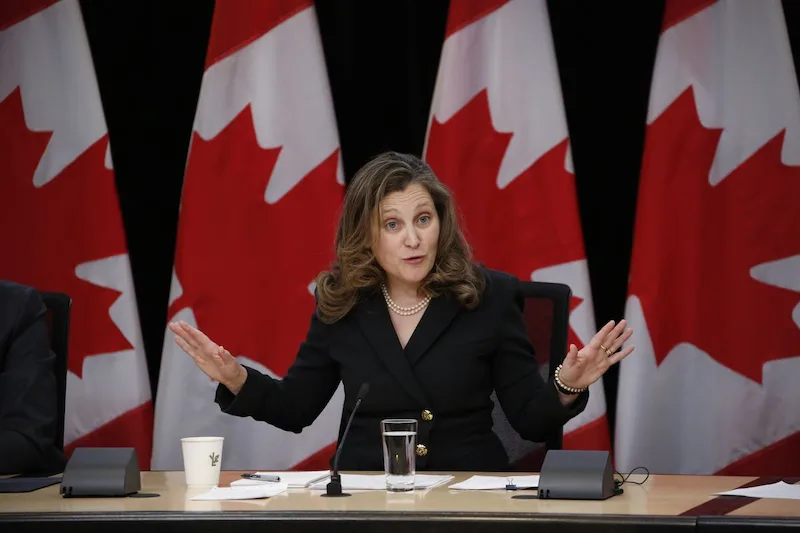


In anticipation of Finance Minister Chrystia Freeland’s upcoming budget, sources familiar with the plans suggest a significant allocation of funds towards bolstering Canada’s housing supply. This move comes as the government aims to address mounting public discontent over soaring home prices, with previous announcements outlining billions earmarked for cities in exchange for measures that expedite construction. Additional housing-affordability initiatives are reportedly in the works ahead of the budget presentation on April 16, indicating a comprehensive approach to tackling the housing crisis.
The upcoming budget is expected to allocate resources not only towards housing initiatives but also towards industrial subsidies, defense, university research, and drug plans, necessitating further revenue generation or spending cuts to adhere to Freeland’s deficit-containment pledge. In light of the anticipated annual deficits of around C$40 billion between 2023 and 2026, concerns have been raised over the government’s ability to meet its fiscal targets, prompting speculation on potential revenue-raising measures.
Reports indicate that soft home construction activity in certain regions last year was influenced by higher interest rates and bureaucratic hurdles, underscoring the pressing need for accelerated construction efforts. As surging rents spark debates on the capacity to accommodate high numbers of immigrants, policymakers face a delicate balance between financial constraints and public expectations in the crafting of what will likely be one of their final budgets before the next election.
Amidst the political backdrop, where the Liberal Party trails in opinion polls, there is a cautious approach to prevent a fiscal plan perceived as inflationary. The prospect of corporate tax hikes, including broad-based levies on large companies, has stirred unease within the business community, fearing potential repercussions on investment and economic growth. While Freeland’s office refrains from commenting on specific tax measures, speculations abound regarding potential fiscal policies to bridge the deficit gap.
Given the prevailing economic landscape, characterized by unprecedented government spending in response to the pandemic, tightrope walking between fiscal prudence and economic recovery becomes imperative. Balancing spending priorities, revenue generation, and inflation concerns against the backdrop of a challenging electoral climate poses a formidable task for Trudeau and Freeland. Ultimately, the budget’s unveiling will shed light on the government’s strategy to navigate these complex economic waters while addressing pressing societal needs responsibly and effectively.