


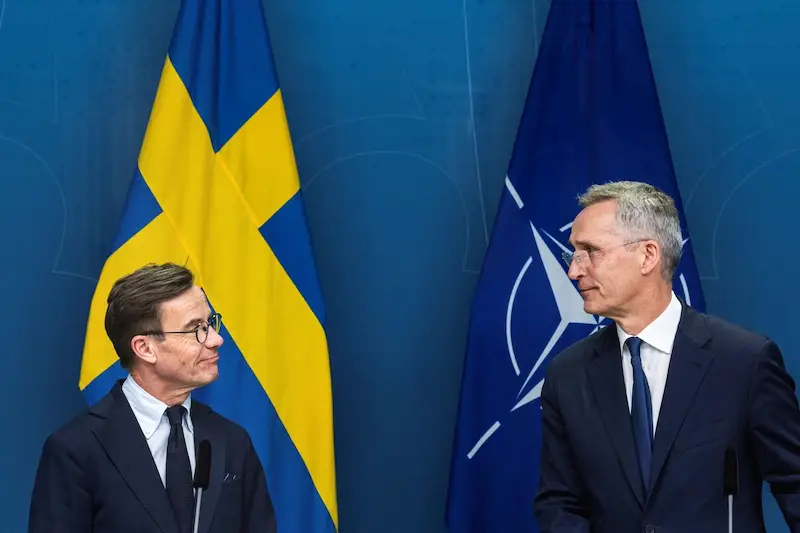


In a historic moment, Sweden officially became the 32nd member of NATO, completing the alliance's expansion into the Nordic region. Prime Minister Ulf Kristersson handed Sweden's accession document to Secretary of State Antony Blinken at the US State Department on Thursday, symbolizing the country's formal entry into the alliance. The Swedish flag is set to be raised over NATO's headquarters in Brussels on Monday, signifying a new chapter in the country's defense strategy.
Kristersson expressed Sweden's commitment to upholding the responsibilities and values shared by all NATO allies. "We will live up to the high expectations from all NATO allies," he stated, emphasizing Sweden's readiness to share burdens, responsibilities, and risks with its new partners. This move reinforces the security cooperation in the Nordic region, particularly in the Baltic Sea.
The road to Sweden's NATO membership was not without obstacles. While Finland completed its accession 11 months earlier, objections from Turkey and Hungary delayed Sweden's entry. However, after almost two years of tireless diplomacy, the final hurdles were overcome. Turkey ratified its approval in January, following a deal to acquire fighter jets from the US. Hungary's parliament endorsed Sweden's membership in late February, bringing the Nordic nation into the fold.
With Sweden and Finland now part of NATO, the alliance's presence in the Baltic Sea region is more robust than ever. This development is crucial for the defense of the Baltic nations, as it fortifies NATO's capabilities in the face of potential Russian aggression. The geographic significance of the Nordic countries, particularly their proximity to Russia, highlights the strategic importance of their inclusion in the alliance.
As a full-fledged member, Sweden gains access to NATO's Article 5 mutual defense commitments, ensuring that allies will come to its aid in the event of an attack. Additionally, Sweden will play a role in defending other NATO members. The country's strategic location, including its island of Gotland, provides key advantages in securing naval routes and airspace, enhancing the alliance's overall defense capabilities.
Sweden's entry into NATO comes at a pivotal time, as the alliance navigates uncertainties surrounding the US's commitment to European security. With potential shifts in US foreign policy, including the possibility of a return to office by Donald Trump, the dynamics of transatlantic security cooperation remain fluid. Nevertheless, Deputy Prime Minister Ebba Busch highlighted the significance of Sweden's NATO membership in strengthening democratic values and safeguarding freedom and peace in the region.
In conclusion, Sweden's accession to NATO marks a significant milestone in the country's defense posture and the broader security landscape of the Nordic region. By aligning with the alliance, Sweden signals its commitment to collective security and underscores the importance of collaboration in upholding shared values and interests. As Sweden embarks on this new chapter within NATO, the country stands ready to contribute to the alliance's mission of promoting stability and security in Europe and beyond.