


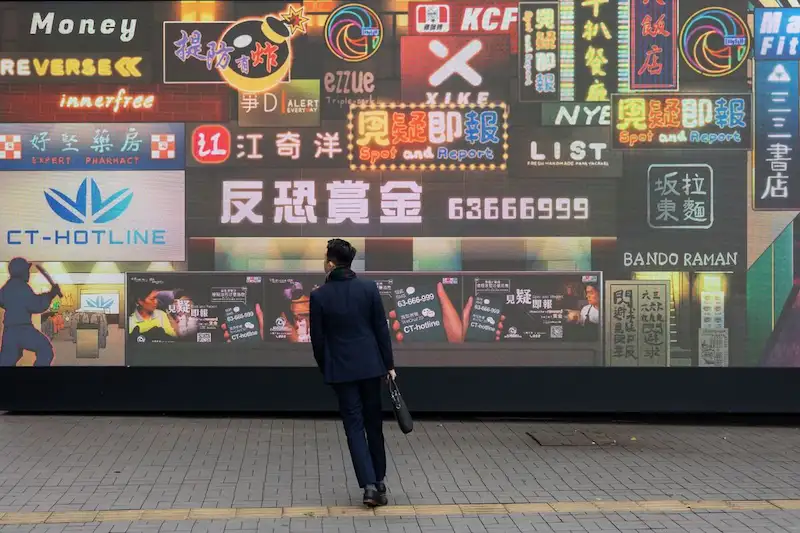


In a swift and unprecedented move, Hong Kong is pushing through new security legislation that could result in life sentences for offenses such as treason. The 212-page bill, recently unveiled by the government, has been met with urgency as debates ensued in the city’s legislature in rapid succession. This hasty progression comes in response to heightened pressure from Chinese leaders, with the aim of expediting the law’s implementation at an accelerated pace.
The speed at which this legislation is advancing underscores Hong Kong’s efforts to showcase compliance with President Xi Jinping’s steadfast emphasis on national security, particularly during the National People’s Congress. This accelerated process appears to demonstrate to Beijing that Hong Kong is aligning itself closely with the central government's priorities, as stated by Chong Ja Ian, an associate professor of political science at the National University of Singapore.
The proposed security law introduces stringent measures, amending definitions of crimes and penalties in a way that aligns Hong Kong more closely with mainland China's legal framework. Among the provisions is an expansion of police powers, allowing for the detention of suspects without charge for an extended period, with court approval, straying significantly from existing procedural norms. These measures have raised concerns among analysts, such as Patrick Poon, a visiting researcher at the University of Tokyo, who predicts a surge in self-censorship and a chilling effect on civil liberties and media freedom within the region.
While the bill has garnered support during a recent public consultation, international entities have expressed apprehension. The legislation risks eroding fundamental freedoms in Hong Kong, as noted by a spokesperson for the European Union. Geopolitical tensions may also escalate, as seen with Western backlash against previous security laws. The implementation of this new security law, akin to the China-drafted national security law in 2020, could provoke responses from major economies, potentially straining relations and prompting further sanctions.
Hong Kong officials stress the necessity of this legislation in maintaining stability and securing the economic future of the city. With complex geopolitical dynamics and evolving security threats, the government asserts that this law is crucial for safeguarding against potential risks. This assertion is echoed by security chief Chris Tang, who emphasizes that the proposal aims to protect human rights amidst escalating challenges.
As the local stock market reacts positively to the developments, with the Hang Seng Index rising in line with regional trends, the urgency surrounding the bill is palpable among legislators. With mounting pressure to swiftly pass this law, the fervor to expedite proceedings is evident, as indicated by lawmaker Jeffrey Lam’s resolute call for continual sessions, even into late hours, reflecting the determination to enact this significant legislation without delay.