


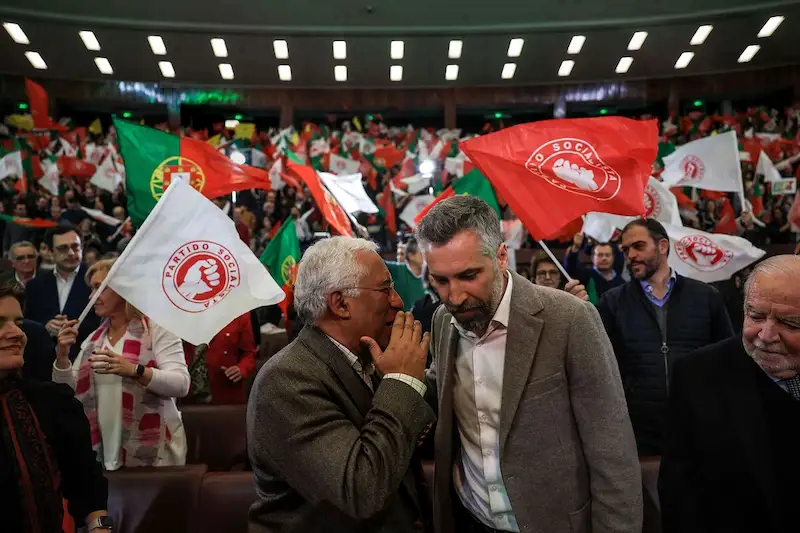


Portugal is heading into a pivotal election this weekend following the abrupt resignation of Prime Minister Antonio Costa, opening the door for a potential shift in power towards the right in a country that has long been dominated by center-left and center-right parties. The sudden departure of Costa in the midst of allegations of influence peddling and police raids on government buildings has set the stage for a closely contested election, with the Socialists under new leader Pedro Nuno Santos facing off against the right-of-center AD coalition, comprising the PSD and smaller CDS-PP.
Recent opinion polls indicate a tight race between the Socialists and the AD alliance, with neither party projected to secure an absolute majority. This scenario raises the possibility of a hung parliament and a potential coalition government, with smaller parties likely playing a crucial role in determining the outcome of key policy decisions, such as the budget.
One of the key players in this election is the far-right party Chega, led by the outspoken Andre Ventura. Despite experiencing a rapid rise in support, Chega is not expected to secure a top-two position. However, its growing populist appeal, particularly on issues like immigration and corruption, has resonated with a significant portion of voters, making it a potential kingmaker in the formation of a coalition government.
Economically, Portugal is navigating a period of moderate growth following a post-pandemic rebound. While the country's debt ratio has decreased, challenges such as low wages, affordable housing shortages, and high taxes remain at the forefront of voters' concerns. Both the Socialists and the AD alliance have put forward proposals to address these issues, with the former focusing on tax cuts for the middle class and increased minimum wage, and the latter advocating for lower corporate and income taxes.
As Portugal prepares to cast their votes, the outcome of the election will have significant implications for the country's economic and political landscape. Whether the Socialists can retain power under new leadership or if the AD alliance will secure a victory, the role of smaller parties like Chega in shaping the future government dynamics cannot be underestimated. With the country at a crossroads, voters will have the opportunity to decide the direction they want Portugal to take in the coming years.