


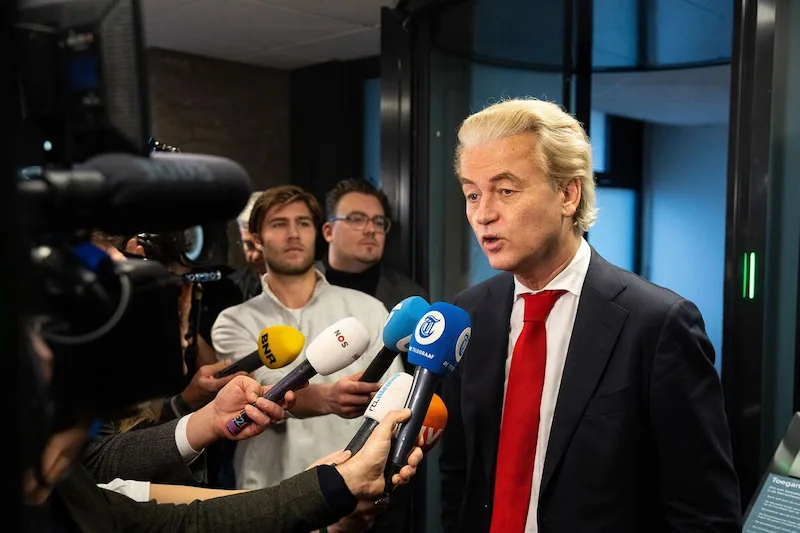


In a surprising move, Geert Wilders, the winner of the recent Dutch election, has expressed his willingness to forego his claim to the position of Prime Minister in order to facilitate discussions aimed at forming a right-wing cabinet. Despite his party, the Freedom Party, securing a significant victory with around 25% of parliamentary seats, Wilders has faced challenges in securing the necessary support to lead a government.
Acknowledging the importance of unity and cooperation, Wilders took to social media to announce his decision, stating, "The love for my country and voter is great and more important than my own position." This selfless gesture comes as a part of his efforts to break the deadlock and pave the way for a functional government that represents the best interests of the Dutch people.
Reports from Dutch public broadcaster NOS suggest that leaders of the four potential coalition parties, including Wilders, have agreed to remove themselves from contention for the role of Prime Minister in the next cabinet. This strategic move aims to eliminate potential obstacles in the formation of a government and streamline the negotiation process. Instead, the focus is on establishing an "extra-parliamentary cabinet" based on a more flexible coalition agreement.
An extra-parliamentary cabinet, a rare concept last witnessed in the Netherlands in the 1970s, introduces a novel approach to governance. By including cabinet members who are not affiliated with any political party and operating under a less rigid coalition agreement, this model allows for greater adaptability and consensus-building. Despite being the leader of the largest party, Wilders has indicated his willingness to support this alternative arrangement in the interest of national stability.
Wilders continues to advocate for a right-wing cabinet that aligns with his party's stance on asylum and immigration policies. By prioritizing the needs and preferences of his constituents, Wilders remains committed to finding common ground with potential coalition partners to address key issues facing the nation. His willingness to make concessions for the greater good underscores his dedication to serving the Dutch electorate and ensuring a smooth transition to a new government.