


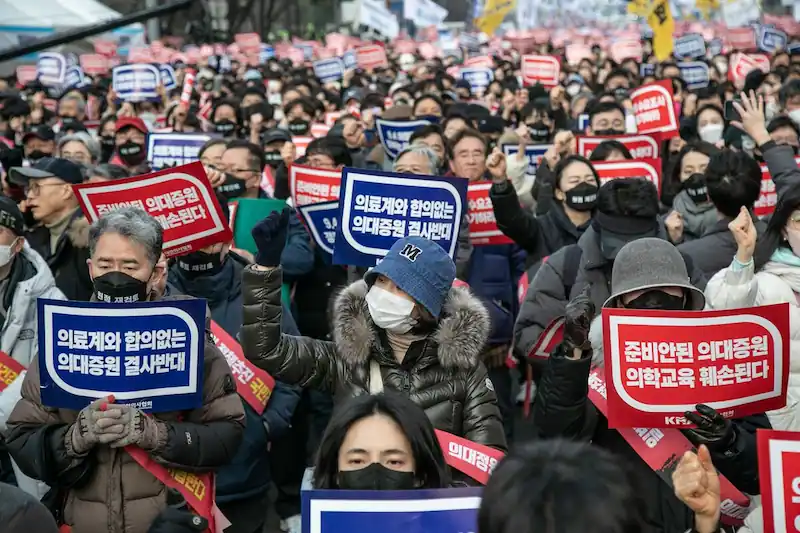


In response to the ongoing strike by thousands of trainee doctors in South Korea, the government has allocated additional funds to support the healthcare system. The Vice Health Minister, Park Minsoo, announced that 39.3 billion won ($30 million) would be provided to national and local medical centers facing staffing shortages due to the strike. This financial support aims to ensure that inpatient care and intensive care unit capacities are maintained at pre-strike levels, prioritizing the well-being of patients.
The strike, now in its fourth week, has seen over 90% of trainee doctors protesting against the government's plan to increase medical school enrollments. Despite the walkout, the government remains steadfast in its decision to raise enrollment by 2,000 spots annually to address future healthcare shortages in an aging population. While the public appears to support this initiative, medical students have joined the protest by requesting leaves of absence in solidarity with the striking doctors.
President Yoon Suk Yeol's administration is actively engaging with universities to expand medical school seats in regions outside of Seoul. This strategic move aims to address the geographical distribution of doctors and improve healthcare access in underserved areas. Although the government is willing to negotiate on issues like working conditions and salaries, it remains resolute on the plan to increase medical enrollments to tackle specialist shortages.
The protest leaders argue that simply boosting enrollments won't solve the root problems within the healthcare system, such as uneven distribution of doctors and legal uncertainties. They seek clearer responses from the government to address these concerns. Meanwhile, the government has taken stern measures, threatening to suspend the medical licenses of trainee doctors who defy the order to return to work, potentially impacting their future careers.
Amidst the strike, President Yoon's approval ratings have risen, bolstering his party's position ahead of upcoming elections. As tensions persist between the government and the medical community, the outcome of this labor dispute will not only shape the future of healthcare in South Korea but also have political implications for the ruling party.