


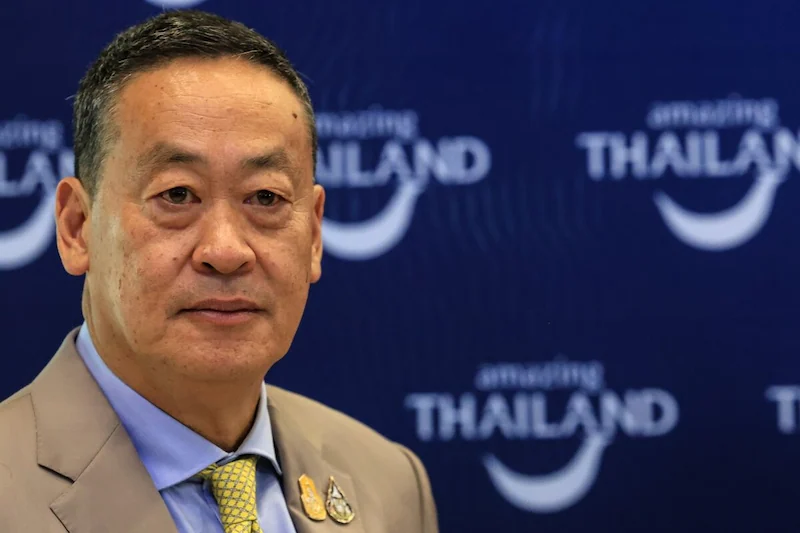


In a potential move to ease tensions with the central bank and better manage economic policies, Thailand's Prime Minister Srettha Thavisin is reportedly preparing to step down from his position as finance minister. According to a report by local newspaper Krungthep Turakij, the former property tycoon is considering appointing Pichai Chunhavajira, a trusted confidant and chairman of the Stock Exchange of Thailand, as his replacement. This decision is seen as a strategic one to ensure more effective implementation of the government's economic strategies, as Srettha's demanding schedule has reportedly hindered the ministry's capacity to undertake new policies.
The appointment of Pichai Chunhavajira, a seasoned figure in capital markets, could potentially alleviate the ongoing clashes between Srettha's administration and the central bank, particularly concerning divergent views on economic revival strategies. Governor Sethaput Suthiwartnareuput of the Bank of Thailand has resisted Srettha's calls for interest rate cuts as a remedy for boosting economic growth, leading to strained relations between the two entities. By bringing in Pichai, who is well-regarded for his financial acumen, the government aims to foster a more harmonious relationship with the central bank and address the challenges in steering Thailand's economy towards recovery.
One of the pressing tasks awaiting the new finance minister will be overseeing the distribution of 10,000 baht ($280) to 50 million individuals as part of a stimulus measure to spur consumption. This initiative, a prominent campaign promise of the Pheu Thai Party, has faced criticism from economists and the central bank for its potential inflationary impact and fiscal risks. As such, the incoming minister will need to navigate these concerns while ensuring the effectiveness of the stimulus package in bolstering economic growth.
In the backdrop of lackluster economic performance, characterized by a modest 1.9% growth rate last year, Prime Minister Srettha has set ambitious targets to elevate annual expansion to 5%. His administration has introduced various measures, including visa waivers for tourism promotion and efforts to attract foreign investment, to revitalize the economy. However, the persistent disagreements with the central bank and the resulting uncertainty have led to foreign investors offloading Thai assets, contributing to a net outflow of $1.5 billion in bonds and stocks this year.
As Thailand grapples with economic challenges and strives to regain investor confidence, the appointment of a new finance minister signals a potential shift in approach. By choosing a seasoned professional like Pichai Chunhavajira to helm the finance ministry, the government aims to enhance coordination with key stakeholders and navigate the complex terrain of economic policy amid external pressures and internal dynamics. This transition could mark a pivotal moment in Thailand's economic trajectory, shaping the course of recovery and resilience in the face of prevailing uncertainties.