


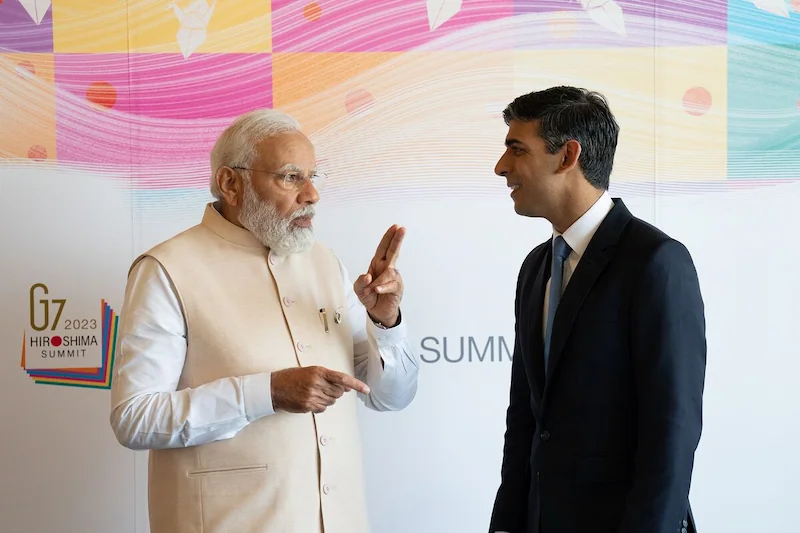


Negotiations on a trade deal between the UK and India have hit a temporary pause, with talks not set to resume until after the upcoming Indian elections. The 14th round of negotiations has concluded without a final agreement, leaving key issues on goods, services, and investment still unresolved. While both sides had aimed to make significant progress in the latest round, it now seems that a post-election timeline is more realistic for further discussions.
The delay in reaching a trade deal holds significance for British Prime Minister Rishi Sunak, as India represents a crucial opportunity to secure a major agreement before the UK's own general election expected in 2024. Sunak's trade strategy, which focuses on forging new partnerships outside the EU post-Brexit, has faced scrutiny due to the limited number of FTAs actually signed thus far. An FTA with India would not only bolster Sunak's trade agenda but also demonstrate the benefits of a more globally oriented UK trade policy.
Despite Sunak's recent phone call to Indian Prime Minister Narendra Modi to push for progress, unresolved issues remained a sticking point in the negotiations. Officials had set ambitious targets to address these challenges within a limited time frame, prompting a series of high-level discussions. However, the complexities and sensitivities involved in the negotiations meant that certain unresolved issues could not be swiftly ironed out, leading to the decision to close the 14th round of talks.
Moreover, internal advisories within the UK government have suggested that the proposed trade deal may not be as advantageous to the UK as initially anticipated. The Department for Business and Trade, leading the negotiations, has reportedly advised Sunak against rushing into an agreement that may not fully serve the UK's interests. This caution reflects the ongoing complexities and challenges in balancing the needs and priorities of both countries in the negotiations.
As the UK and India navigate the complexities of trade discussions, the focus remains on achieving an ambitious and mutually beneficial trade deal. Both sides have reiterated their commitment to reaching an agreement that upholds fairness, balance, and the best interests of their respective economies. With negotiations expected to resume post-Indian elections, the next phase of talks will be critical in determining the future trajectory of the UK-India trade relationship.