


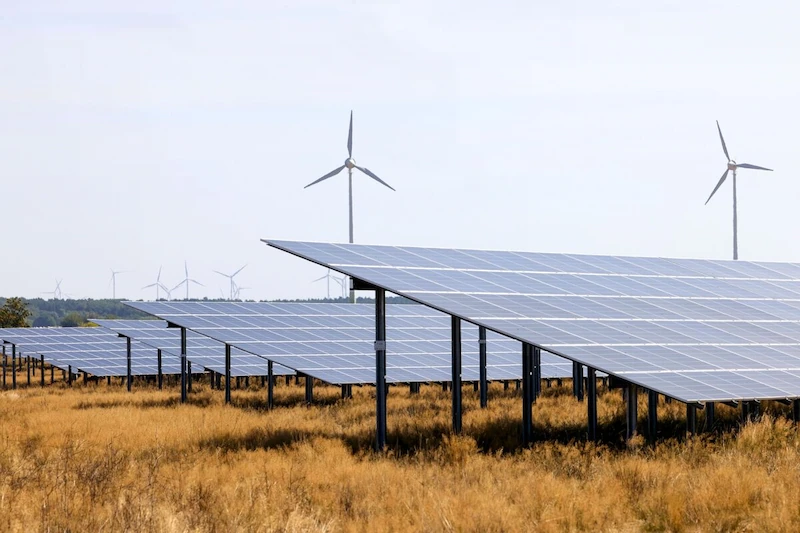


Germany, known as Europe's largest economy, is making significant strides towards reaching its climate goals by 2030. The Federal Environment Agency's recent report revealed that the country is on course to reduce greenhouse gas emissions by 65% from 1990 levels, a more optimistic outlook than previously expected. This positive development is a crucial step in the nation's transition to renewables and its efforts to combat climate change.
While Germany's overall progress is promising, certain sectors such as transport and buildings pose significant challenges. The transport sector, in particular, has been identified as a "major problem child" for emissions reduction. The country is projected to fall short of its targets for electric vehicles, highlighting the need for more aggressive measures to promote sustainable transportation options.
In the building sector, efforts to curb emissions have also faced obstacles. Last year, a controversial proposal to ban fossil-fuel boilers in an attempt to reduce emissions drew public backlash, leading to a significant revision of the plan. These challenges underscore the complexities of achieving emission reductions in various sectors of the economy.
Despite these hurdles, Germany's commitment to phasing out coal by 2030 and accelerating the expansion of renewables has had a positive impact on emissions reduction. With renewables accounting for over half of the country's power production, the transition to cleaner energy sources is well underway. Additionally, industry's shift from coal to gas has helped lower emissions, signaling progress towards a more sustainable energy mix.
Looking ahead, the European Union's Emissions Trading System (ETS) is expected to play a crucial role in further reducing emissions in the transport and heating sectors. By extending the ETS to cover heating and transport fuels by 2027, consumers will face higher costs for using gas boilers and driving older, more polluting vehicles. It is essential to ensure that these measures are implemented in a socially inclusive manner to minimize any adverse impacts on vulnerable populations.
In conclusion, while Germany still faces challenges in certain sectors, the country's unexpected progress towards meeting its 2030 climate goals is a positive development. Continued efforts to address emissions in the transport and building sectors, coupled with policies that promote renewable energy and efficient energy use, will be essential in ensuring a sustainable and climate-resilient future for Germany.