


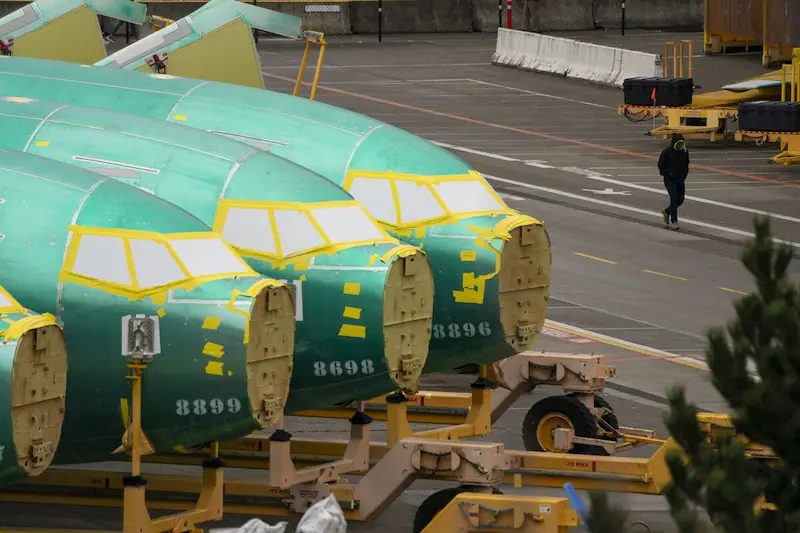


Boeing's ongoing challenges are reverberating throughout the aviation industry, affecting not only the planemaker itself but also airlines and passengers. The company's production delays, exacerbated by quality issues exposed by recent accidents, have created a shortage of single-aisle jets, leading to operational disruptions for carriers worldwide.
Airlines such as United Airlines, Southwest Airlines, and Ryanair are feeling the impact of reduced deliveries from Boeing. In response, they are adjusting their schedules, seeking alternative aircraft options, and grappling with supply chain constraints. The situation is further complicated by similar production challenges faced by Airbus, Boeing's main competitor, which is struggling to ramp up production to meet demand.
Passengers can expect fewer flight options, potential price increases on popular routes, and overall inconvenience as airlines navigate the shortage of single-aisle jets. Domestic and regional flights are particularly affected, with some routes experiencing significant fare hikes due to limited aircraft availability.
Despite the challenges, there is some optimism for travelers. While fares are expected to rise in certain markets, overall ticket prices are not projected to significantly exceed pre-pandemic levels. However, the operational disruptions and potential fare increases during the busy summer travel season could impact passengers' travel experiences.
The root of the problem lies in a combination of factors, including pandemic-related production delays at both Boeing and Airbus. Over the past few years, airlines have been deprived of thousands of new planes, intensifying the current supply-demand gap. Boeing's recent issues have only exacerbated the situation, contributing to uncertainty surrounding aircraft deliveries and production timelines.
In response to the challenges, airlines are exploring various mitigation strategies. United Airlines, for example, is renegotiating its aircraft orders and considering alternative options to address the delivery shortfall. Southwest Airlines has adjusted its growth plans and halted hiring to adapt to the slower pace of Boeing deliveries.
Looking ahead, the outlook for the aviation industry remains uncertain. While Boeing is working to strengthen its quality controls and improve production output, regulatory limitations and ongoing inspections are impacting its ability to meet demand. With the situation evolving rapidly, airlines and passengers alike must navigate the uncertainties and potential disruptions in the months ahead.