


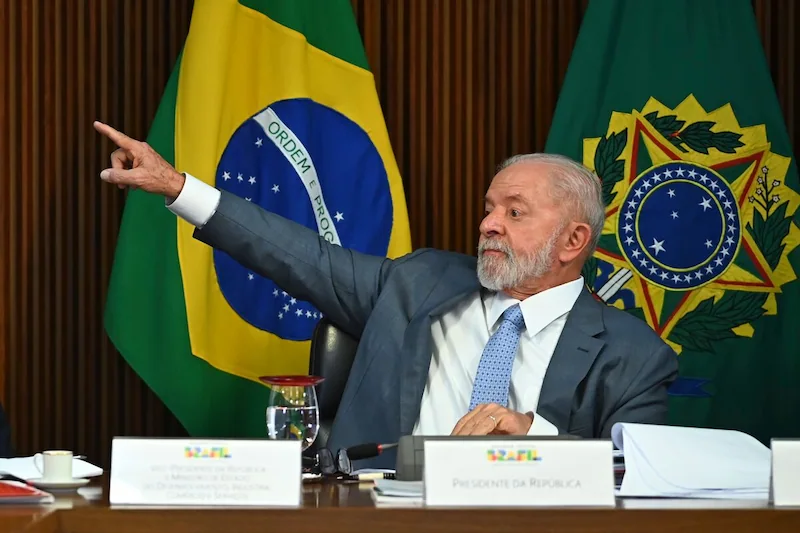


President Luiz Inacio Lula da Silva of Brazil is facing mounting pressure within the presidential palace as the country's economy continues to display lackluster growth. Struggling to boost economic momentum and reverse his declining approval ratings, Lula has been urging his top aides to increase spending and accelerate growth. This recent shift in policy direction has led to controversial decisions, such as instructing state-owned oil company Petrobras to withhold a $9 billion dividend and attempting to remove the head of mining giant Vale SA. These unexpected moves have startled investors who had grown accustomed to Lula's previously measured approach during his first year back in office.
The repercussions of these decisions were quickly felt in the financial markets, with Petrobras and Vale stocks tumbling following government interference. This has prompted uncertainty among investors regarding the future direction of Brazil's economic policies. Lula's call for a cabinet meeting to brainstorm proposals to stimulate growth highlights the urgency with which his administration is seeking solutions to reignite the economy.
Lula's return to power in 2023 marked a challenging time for Brazil, with a slowdown in growth and rising economic pressures. The downturn in commodity prices, coupled with high borrowing costs and a sluggish manufacturing sector, has put a strain on the economy. Additionally, the decline in Lula's popularity underscores the need for concrete measures to address these economic challenges and regain public confidence.
The government's increased intervention in key industries like energy and mining has raised concerns about the broader implications for Brazil's economic stability. Investors are wary of the potential impact on other state-linked companies, the central bank, and fiscal policy. The uncertainty surrounding Lula's interventionist tendencies and the potential consequences for the economy have led to a cautious outlook in the financial markets.
As the government grapples with economic headwinds, Finance Minister Fernando Haddad faces the daunting task of balancing growth initiatives with fiscal responsibility. The need to stimulate the economy while maintaining fiscal discipline poses a delicate challenge for policymakers. With investor confidence hanging in the balance, the government's ability to strike a balance between stimulating growth and ensuring fiscal stability will be crucial in navigating Brazil's economic trajectory in the coming months.
In conclusion, Lula's recent policy shifts and increased intervention in key sectors signal a departure from his previously cautious approach. The government's focus on stimulating growth and addressing economic challenges reflects a sense of urgency to revitalize the Brazilian economy. However, the potential risks associated with these measures have stirred apprehension among investors and stakeholders, underscoring the need for a careful and balanced approach to economic management in Brazil.