


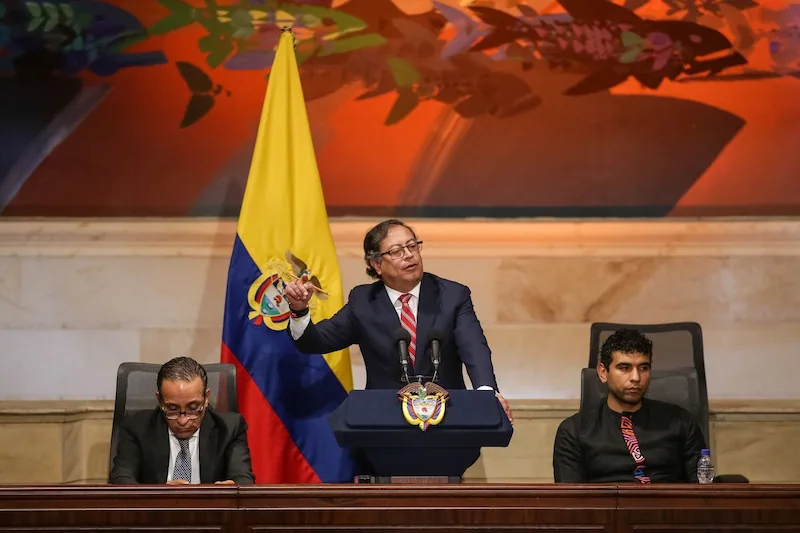


Colombian President Gustavo Petro has embarked on a bold endeavor to garner popular support for his ambitious plan to overhaul Colombia's constitution, aiming to address longstanding societal issues and shake up the country's economic framework. Facing dwindling approval ratings and mounting obstacles to his legislative agenda, Petro made headlines over the weekend with his proposal to convene a constituent assembly. In a bid to breathe new life into his presidency, Petro outlined his vision by highlighting eight key areas for reform, including safeguarding healthcare and clean water access, and redefining the central bank's mandate to prioritize economic growth and employment while preserving its autonomy.
The proposed constitutional changes put forth by President Petro also aim to reassure the public that he has no intention of seeking to extend his tenure beyond the scheduled end of his term in 2026. Emphasizing the need for the people to take charge in addressing the country's persistent challenges, Petro underscored the failure of existing institutions established by the 1991 Constitution to adequately tackle core societal issues. His call for a constitutional rewrite is a bold move that necessitates majority support in Congress, judicial approval, and a successful referendum – a formidable path fraught with hurdles.
Amidst Petro's bid for constitutional reform, concerns over potential economic ramifications have surfaced. While financial markets have displayed resilience thus far, economic groups have expressed unease over the perceived uncertainty and instability linked to Petro's proposal for a constituent assembly outside traditional legislative channels. Industry representatives caution that such a move could deter investment and erode businesses' confidence, potentially thwarting efforts to find tangible solutions to pressing economic challenges.
Despite Petro's ambitious agenda, analysts remain skeptical about the likelihood of radical changes to Colombia's economic model. Credicorp Capital predicts that turbulent political and regulatory dynamics may heighten the country's risk profile. Additionally, experts at Teneo Holdings view Petro's constitutional overhaul initiative through a political lens, suggesting it could serve as a diversion tactic from the president's legal woes, policy delivery shortcomings, and struggles in advancing his reform agenda. As Petro treads a complex path towards constitutional reform, the future trajectory of Colombia's governance and economy hangs in a precarious balance.