


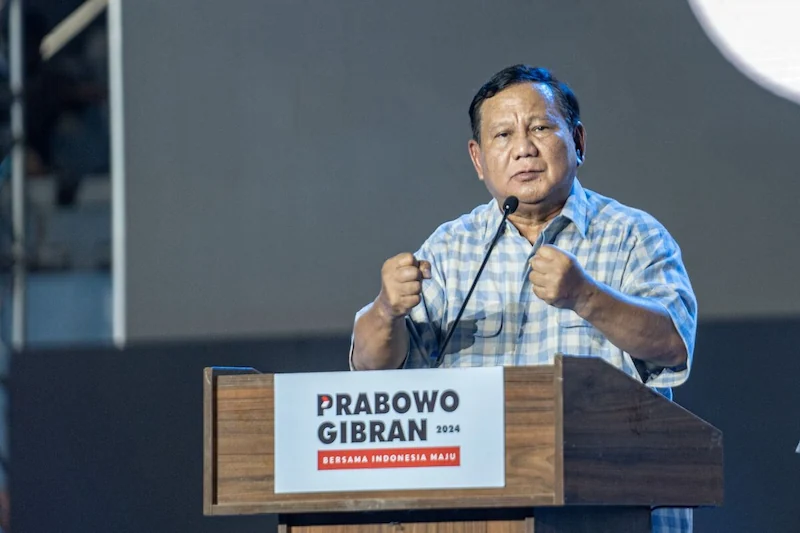


In a resounding victory, Prabowo Subianto has officially emerged as the winner of Indonesia's presidential election, securing nearly 58.6% of the votes. This landslide triumph paves the way for him to take the reins of Southeast Asia's largest economy later this year. As the son of incumbent President Joko Widodo's running mate, Gibran Rakabuming Raka, Prabowo is set to be sworn in for a five-year term on October 20th, marking his third attempt at the presidency after two previous losses to Jokowi.
The results, which were in line with independent quick counts conducted shortly after the polls closed on February 14th, solidify Prabowo's claim to the presidency. However, the victory may face challenges as his opponents, Anies Baswedan and Ganjar Pranowo, have hinted at filing a lawsuit to the Constitutional Court, alleging fraud. With a three-day window to gather evidence and lodge their complaints, the potential for legal contestation looms over the election outcome.
One of the key hurdles that President-elect Prabowo will need to navigate is the fragmented nature of the Indonesian parliament, where the opposition holds a considerable presence. The Indonesian Democratic Party of Struggle, previously a supporter of Jokowi, emerged as the largest party with around 15% of the votes, while Prabowo's coalition partners, including Gerindra, Golkar, the Democratic Party, and the National Mandate Party, collectively account for about 42% of the seats.
As Prabowo prepares to assume office, forming a cohesive coalition to advance his policy agenda becomes crucial. With promises to continue Jokowi's pro-business reforms and foster increased investment in the trillion-dollar economy, his cabinet appointments, particularly for crucial positions like finance minister, will be closely monitored by investors. The new government's ability to navigate intricate reforms such as funding social programs, reducing energy subsidies, and privatizing state-owned enterprises will be critical in shaping Indonesia's economic trajectory in the coming years.
Focusing on fiscal prudence while aiming for ambitious growth targets, including a goal of 8% annual growth, Prabowo's administration envisions propelling Indonesia towards high-income status. Balancing economic expansion with sustainable development practices will be at the forefront of his leadership, as he seeks to leverage Indonesia's robust economic foundation to drive progress and prosperity for its citizens.