


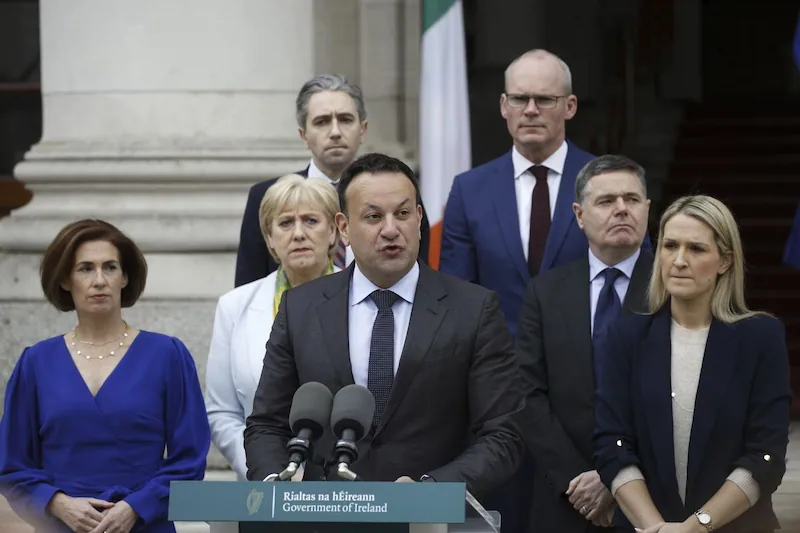


In a surprising turn of events, Irish Prime Minister Leo Varadkar has announced his decision to step down from his position after 13 years in government. Varadkar made this emotional announcement in Dublin, citing his belief that he may no longer be the best person for the job after seven years in office. Despite listing the achievements of his Fine Gael party, Varadkar acknowledged the challenges facing the coalition government, particularly in areas such as housing and immigration.
Varadkar's unexpected resignation has set the stage for a new leadership challenge within the Irish government. While he will remain as Taoiseach until a successor is chosen, the departure of such a prominent figure leaves a void that must be filled. The upcoming leadership transition comes at a critical time for the coalition administration, which has faced setbacks in recent referendum campaigns and public unrest over issues like housing and asylum seekers.
As the government navigates this leadership change, the pressure is on to demonstrate that it remains capable of addressing the concerns of the Irish people. With the rise in popularity of Sinn Fein, the governing party will need to contend with a strong alternative voice in the political landscape. Sinn Fein's progressive proposals on housing and social issues have resonated with younger generations, posing a challenge to the established parties.
Among the potential contenders for the leadership of Fine Gael are figures like Paschal Donohoe, the public expenditure minister and Eurogroup president, and Simon Coveney, the enterprise minister. The choice of Varadkar's successor will be crucial in determining the direction of the government moving forward, especially as the country grapples with societal changes and economic uncertainties.
Varadkar's decision to step down marks the end of an era characterized by progress and change in Ireland. As the country's first openly gay and biracial leader, Varadkar symbolized the strides made in diversity and inclusion. His tenure saw significant milestones, such as steering the country through Brexit negotiations and championing progressive social reforms.
Despite his resignation, Varadkar's legacy will endure as Ireland continues to evolve and address its pressing challenges. The search for a new leader signals a turning point in the political landscape, one that will shape the future trajectory of the Irish government and its relationship with its citizens.