


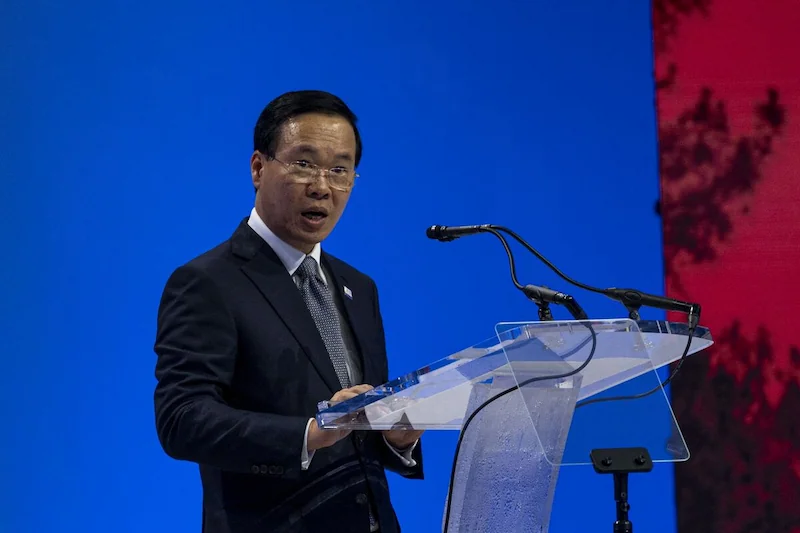


In a surprising turn of events, President Vo Van Thuong of Vietnam tendered his resignation on Wednesday, citing violations of party regulations and laws. This move marks yet another high-profile departure in the country's leadership, following a string of recent investigations targeting top officials. Thuong's resignation, announced by the Communist Party, also sets a record as the shortest presidency in Vietnam's history, despite the largely ceremonial nature of the role.
The Communist Party disclosed that Thuong had breached rules governing party members but did not elaborate on the specifics of the allegations against him. This departure adds to the instability in Vietnam's political landscape, coming just over a year after the previous president stepped down amidst a corruption probe. Party Chief Nguyen Phu Trong, the country's paramount leader, now faces the task of navigating the aftermath of Thuong's abrupt resignation.
Following Thuong's exit, the National Assembly is set to convene a special session to vote on his resignation, with Vice President Vo Thi Anh Xuan slated to assume the duties of acting president in the interim. The 53-year-old Thuong was elected to the presidency in March 2023, succeeding his predecessor who resigned amid corruption allegations.
In a related development, Hoang Thi Thuy Lan, a member of the party's Central Committee, has been expelled for violating regulations. Lan's expulsion follows her arrest on bribery charges earlier this month, signaling a broader crackdown on corruption within the Vietnamese political elite. These recent upheavals have sparked speculation about potential shifts in the country's leadership structure and the upcoming party congress in 2026.
The sudden resignation of President Thuong has triggered fluctuations in investor sentiment, with trading volumes on Vietnam's main stock exchange experiencing a surge. Uncertainties surrounding policy direction and political stability have heightened concerns among investors, underscoring the need for clarity and continuity in leadership. Thuong's departure underscores the government's intensified efforts to address malfeasance among senior officials and uphold transparency in governance.
Despite Thuong's relatively brief tenure as president, he was regarded as a rising figure within the Communist Party, with analysts tipping him as a potential successor to Party Chief Trong. Known for his involvement in shaping Vietnam's foreign policy approach, Thuong fostered closer ties with global powers such as the United States, China, and Russia. His presidency saw efforts to attract foreign investment, enhance security partnerships, and promote economic growth, reflecting a proactive stance in positioning Vietnam on the international stage.