


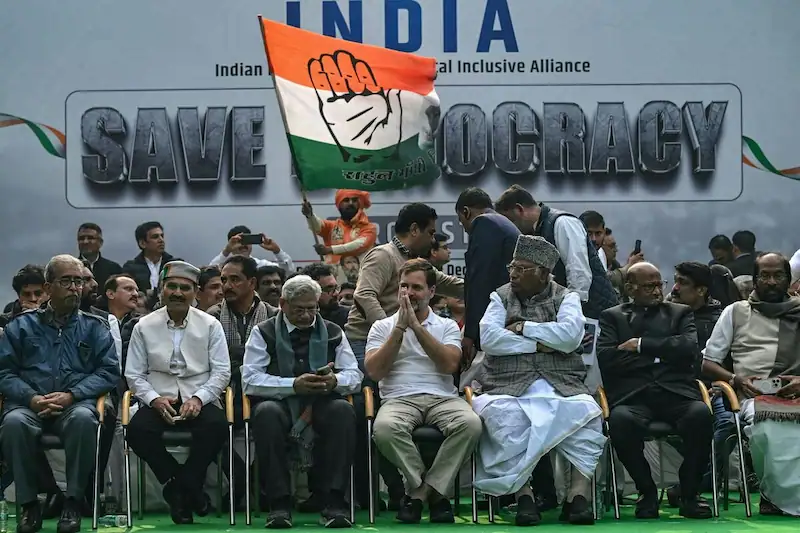


As India gears up for the upcoming elections, opposition leaders are stepping up to challenge Prime Minister Narendra Modi's dominance. Despite facing setbacks, the Indian National Development Inclusive Alliance (I.N.D.I.A.), a coalition of over 20 parties, is determined to present a formidable challenge to Modi and his Bharatiya Janata Party. With defections, disagreements over seat sharing, and recent losses in state elections, the alliance is facing an uphill battle.
Rahul Gandhi, scion of India's prominent political dynasty, has been at the forefront of the opposition's efforts. Despite facing criticism for his leadership skills, Gandhi continues to rally support. His recent 65-day trek across 15 states, ending in a march from the east to the west of the country, has energized his followers. Gandhi's efforts to connect directly with voters have shown some success, with the Congress party scoring a victory in Karnataka in May 2023.
Another key player in the opposition is Mallikarjun Kharge, the first non-Gandhi to lead the Congress party in over two decades. With his Dalit background and experience as a seasoned politician, Kharge is spearheading efforts to strengthen the opposition alliance. His role in negotiating with regional parties and shaping the party's commitments and guarantees for the upcoming elections is crucial in defining the alliance's strategy.
Mamata Banerjee, the only female chief minister in India, has been a vocal critic of Modi's policies, particularly those targeting minority communities. As a prominent opposition leader, Banerjee's stance against discriminatory laws and her leadership in West Bengal have garnered significant attention. While she initially played a key role in the opposition alliance, Banerjee's decision not to share seats with the Congress in West Bengal underscores the complex dynamics within the opposition camp.
Akhilesh Yadav, the former chief minister of Uttar Pradesh, poses a significant challenge to the BJP in the politically crucial state. With a sizable population and influence, Uttar Pradesh holds the key to shaping the national political landscape. Yadav's alliance with the Congress for seat-sharing in the state highlights the strategic alliances being formed within the opposition to counter Modi's popularity.
In the southern states, leaders like M.K. Stalin in Tamil Nadu and Pinarayi Vijayan in Kerala provide strong opposition voices against the BJP's Hindu nationalist agenda. Stalin's secular stance and Vijayan's track record of governance have positioned them as key figures in the opposition's fight against Modi. Despite not being part of the alliance, leaders like Vijayan have been vocal in criticizing the central government's dealings with southern states.
As the elections draw near, the opposition leaders are making their voices heard and rallying support against Modi's government. With a mix of regional dynamics, strategic alliances, and individual leadership styles, the Indian opposition is gearing up for a crucial battle to challenge Modi's hold on power in the upcoming elections.