


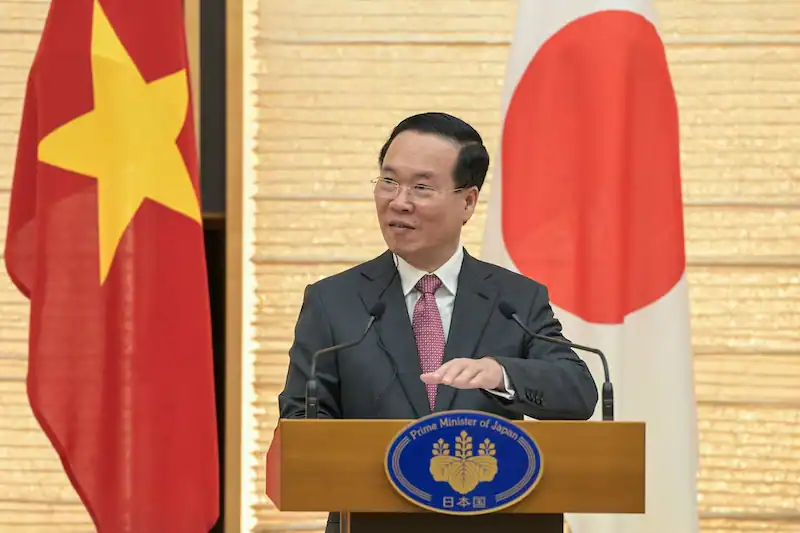


In a move to uphold accountability and combat corruption, Vietnam's legislature has designated Vice-President Vo Thi Anh Xuan as the acting head of state following the removal of President Vo Van Thuong. This latest development comes as part of the ruling Communist Party's intensified crackdown on bribery and misconduct among high-ranking officials. Thuong, aged 53, was ousted from the powerful Politburo due to unspecified violations of party regulations, marking the second consecutive year that a president has been ousted in Vietnam.
Vo Thi Anh Xuan, a prominent female figure in Vietnamese politics, steps into the role of president for the second time in just over a year. The appointment was made official by the Politburo, with Xuan taking on the largely ceremonial position until a new president is elected by the National Assembly. Xuan previously assumed the presidency in the interim period after Nguyen Xuan Phuc's departure last year due to misconduct within his administration.
Thuong's close ties to General Secretary Nguyen Phu Trong, the influential figure behind the anti-corruption campaign, have raised eyebrows regarding the motivations behind his removal. The acceptance of Thuong's resignation and his subsequent removal from key positions within the party reflect the party's commitment to upholding public trust and the reputation of the state. The legislative vote saw overwhelming support for Thuong's removal as president, with 88% of lawmakers backing the decision.
While the anti-graft campaign has drawn praise for its commitment to transparency and accountability, concerns have been raised regarding the impact of leadership reshuffles on foreign investment and bureaucratic efficiency. Foreign investors and diplomats have expressed apprehension over the potential slowdown in decision-making processes and the impact on the business environment. The swift election of a new president is seen as a critical step in restoring confidence and stability within the country.
As Vietnam navigates through these leadership transitions, the question of succession to General Secretary Trong remains unresolved. However, experts believe that the country's foreign policy, particularly its neutral stance between the U.S. and China, is unlikely to undergo significant alterations. Despite the uncertainty surrounding leadership changes, the momentum in bilateral relations with the U.S. is expected to continue, according to statements from the U.S. embassy in Hanoi.
The departure of Thuong from his presidential position underscores the ongoing challenges in leadership succession and reform efforts within Vietnam. While concerns linger about the potential impact on business sentiment, foreign investors remain cautiously optimistic about the country's economic prospects. The upcoming appointment of a new president by the National Assembly in the coming months will be closely monitored for its implications on political stability and economic development in Vietnam.