


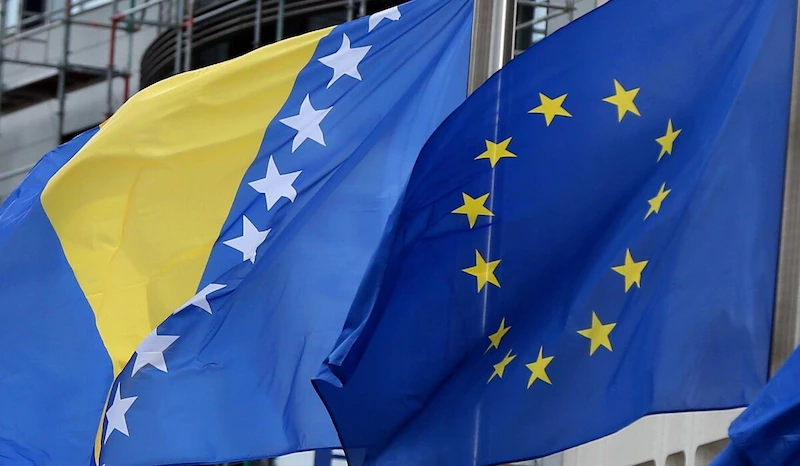


In a strategic move to counter growing Russian influence in the Western Balkans, European Union leaders have given the green light to begin membership talks with Bosnia-Herzegovina. This decision marks a significant step towards integrating a country still grappling with the aftermath of the Balkan wars that ravaged the region in the 1990s following the dissolution of Yugoslavia. The EU's push to bring Bosnia closer into its fold comes amidst heightened geopolitical tensions in Europe, with the bloc seeking to bolster its presence in the face of Russian aggression in Ukraine and expanding Chinese influence.
The fractious nature of Bosnia-Herzegovina, with its Serb-dominated Republika Srpska and Muslim-Croat federation, has long posed challenges to its unity and stability. The weak central government in Sarajevo strives to bridge the divisions between these entities, which have at times threatened to undermine the country's territorial integrity. Against this backdrop, EU leaders' decision to open accession talks with Bosnia signals a concerted effort to strengthen the country's ties with the bloc and deter any attempts at fragmentation or secession.
One of the key figures in Bosnia's complex political landscape is Serb leader Milorad Dodik, known for his close ties to Russian President Vladimir Putin. Dodik's vocal opposition to EU and NATO membership has posed a significant obstacle to Bosnia's Euro-Atlantic aspirations. By advancing the membership talks, EU leaders aim to reduce Russian influence in Bosnia and mitigate the risk of destabilization or disintegration, thereby fostering greater stability and unity in the region.
Bosnia-Herzegovina's path to EU membership has been long and challenging, with the country formally applying in 2016 and receiving candidate status in 2021. The complex process of accession negotiations requires unanimous approval from all EU member states, reflecting the meticulous scrutiny and deliberation involved in expanding the bloc. While Bosnia's journey towards EU membership remains an arduous one, the commitment to initiating talks underscores the EU's long-term vision of fostering peace, prosperity, and cooperation in the Western Balkans.
As the EU navigates a rapidly evolving geopolitical landscape characterized by the conflict in Ukraine and global power shifts, the decision to engage with Bosnia-Herzegovina sends a clear message of unity and solidarity. By emphasizing the importance of upholding European values and principles, EU leaders seek to reinforce Bosnia's place in a free and democratic Europe. Through sustained efforts and careful negotiations, both the EU and Bosnia-Herzegovina can work towards a future of shared prosperity and security within the European family.