


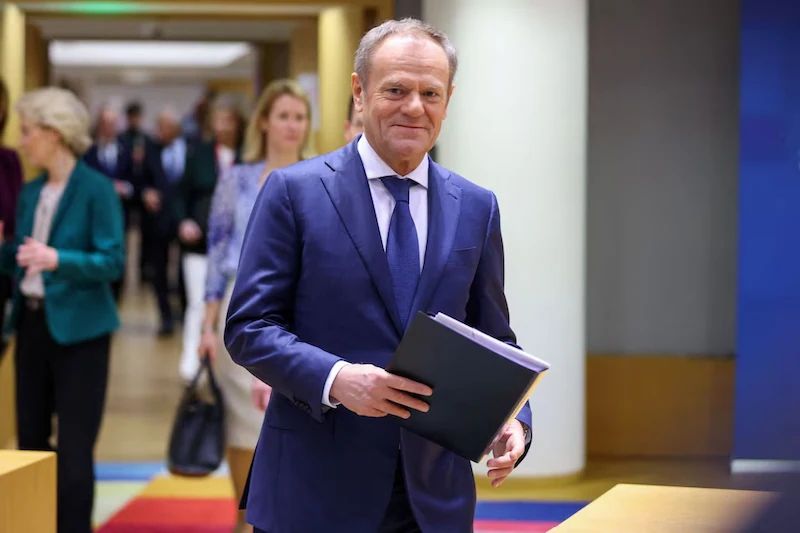


After completing his first 100 days in office, Prime Minister Donald Tusk of Poland finds himself grappling with criticism for falling short on a number of election promises. Despite solid public support, Tusk has been unable to fulfill pledges due to the challenging state of affairs left by his predecessors. This predicament comes at a crucial juncture, with local and European elections looming, where voter dissatisfaction with the pace of change presents a significant challenge for a government that was elected on promises of radical reform.
Tusk's election campaign centered around undoing democratic decline and repairing strained relations with Poland's Western allies, who had raised concerns about the erosion of rule of law and minority rights in the country. While Tusk has highlighted the dire conditions inherited from the previous administration, including record debt, corruption, and institutional chaos, critics point out that the current government has been slow in delivering on its commitments.
The coalition government led by Tusk's party, KO, has faced internal divisions and backlash over certain decisions, such as delaying tax reforms and postponing debates on contentious issues like abortion rights. Despite these challenges, Tusk's administration has managed to unlock billions in frozen European Union funds, a move seen positively by a majority of voters. However, questions remain regarding the timing of this decision and whether it undermines the push for necessary judicial reforms.
One of the significant changes introduced by the new government has been the overhaul of state media, aimed at curbing government influence and hate speech. However, these reforms have faced resistance from opposition lawmakers and legal challenges, raising concerns about media freedom and government interference. Public opinion on these changes is divided, with a sizable portion viewing them as a success while others critique the process and implications for freedom of speech.
As Tusk navigates the complexities of governance and strives to fulfill his pledges, the coming months will be pivotal in determining the trajectory of Poland's political landscape. The mix of public expectations, internal discord, and external pressures will test the government's ability to bring about the promised reforms and address the country's deep-rooted challenges.