


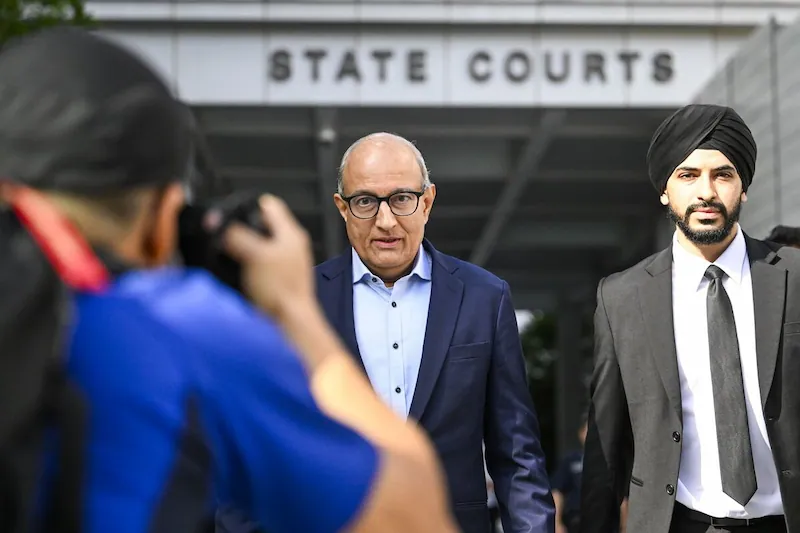


In a startling development, former Singaporean Transport Minister S. Iswaran finds himself facing an extended list of corruption charges, marking a significant escalation in the largest political scandal to rock the city-state known for its stringent anti-corruption measures. Chief prosecutor Tan Kiat Pheng detailed the new charges against the 61-year-old Iswaran, who maintained his plea of not guilty. The charges allege that Iswaran received approximately S$19,000 worth of lavish items, including high-end whiskey, a Brompton bicycle, and golf clubs, in connection to a construction contract for enhancements to an existing train station.
The upcoming court proceedings set for April 2 at the prestigious Singapore High Court add to the existing tally of 35 charges in the corruption case against Iswaran, with the total value of luxury goods purportedly received amounting to over S$403,000. The scandal unfolds as Singapore braces for a carefully orchestrated political transition this year, ahead of the impending general elections slated for November 2025. Prime Minister Lee Hsien Loong, who has pledged to hand over the reins to his deputy Lawrence Wong before the elections, and their People’s Action Party face the challenging task of upholding their reputation for incorruptible governance in the midst of these high-profile allegations.
The latest charges leveled against Iswaran allege improprieties related to exotic gifts obtained from a Lum Chang Building Contractors Pte executive in connection to a construction project at an established MRT station. Lum Chang Building Contractors Pte is a subsidiary of Lum Chang Holdings Ltd, which remained unavailable for immediate comment on the matter. Iswaran, once celebrated for his role in bringing the prestigious Formula 1 racing event to Singapore and representing the nation on global platforms like the World Economic Forum, stands as the first minister in over three decades to become entangled in a corruption inquiry since the case of Minister Teh Cheang Wan in 1986.
The ignominy surrounding Iswaran’s predicament came to light last July when Prime Minister Lee directed him to take a leave of absence, eventually leading to his arrest alongside real estate magnate Ong Beng Seng. Notably, Ong, who has not faced charges and has been released on bail, was implicated for allegedly providing Iswaran with various perks and privileges. Earlier this year, Iswaran was formally charged with benefiting from favors like West End musical tickets, UK soccer match tickets, a luxurious stay at the Four Seasons in Doha, a flight on Ong’s private aircraft, and access to Singapore’s F1 event.
The mounting legal challenges extend beyond Iswaran’s case, as evidenced by the recent charges brought against opposition leader Pritam Singh. Singh stands accused of misleading a parliamentary committee in connection to a former lawmaker’s false statements regarding a sexual assault case, to which he has pleaded not guilty. As Singapore grapples with these high-stakes legal proceedings involving its political figures, the public eye remains keenly fixed on the outcomes of these trials and the implications they hold for the city-state’s governance and reputation on the global stage.