


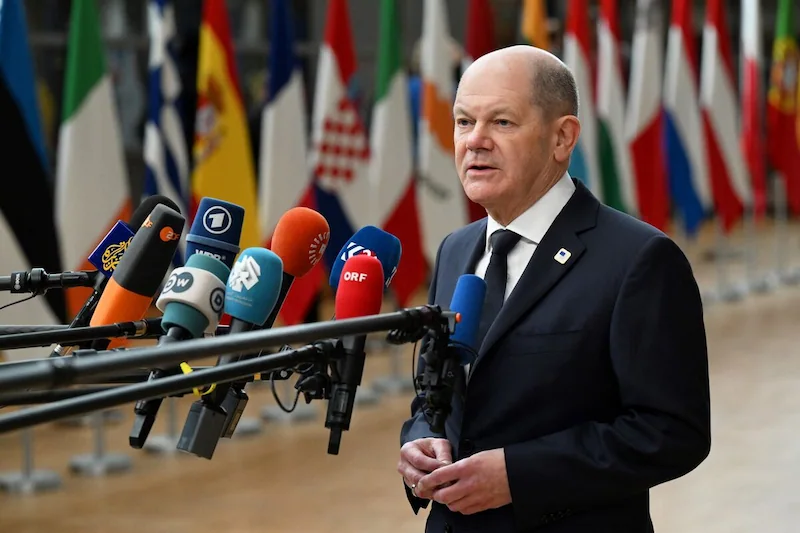


Chancellor Olaf Scholz of Germany has expressed a willingness to engage in discussions regarding potential reforms to the country's budget rules, known as the debt brake. These rules currently restrict borrowing to a fraction of Germany’s economic output, a measure put in place following the 2008 financial crisis to prevent overspending. Scholz, speaking at an event in Brandenburg an der Havel near Berlin, suggested that it may be time to revisit the effectiveness and relevance of these restrictions in their current form.
The debt brake, which limits annual net new borrowing to 0.35% of GDP, with exceptions only for emergencies such as natural disasters, has been a fundamental aspect of Germany’s fiscal policy. However, with evolving economic circumstances and challenges such as the need to sustain defense spending at NATO’s target levels, there is a growing recognition of the potential need for flexibility in these rules.
While any significant changes to the debt limits would require a two-thirds majority in parliament due to their constitutional enshrinement, Scholz’s remarks signal a willingness to at least open the conversation on potential reforms. This stands in contrast to the position of Friedrich Merz, leader of the main opposition conservatives, who has firmly rejected any alterations to the existing restrictions. Similarly, the SPD’s coalition partners, the Free Democrats led by Finance Minister Christian Lindner, have also expressed their resistance to changing the debt brake.
The debate surrounding the reform of Germany’s budget rules reflects a broader discussion on the balance between fiscal responsibility and the need for flexibility to address emerging challenges. As Germany navigates its economic path in a rapidly changing global landscape, the question of how best to adapt its fiscal framework to ensure long-term stability and prosperity remains a topic of keen interest and contention among political leaders and policymakers.