


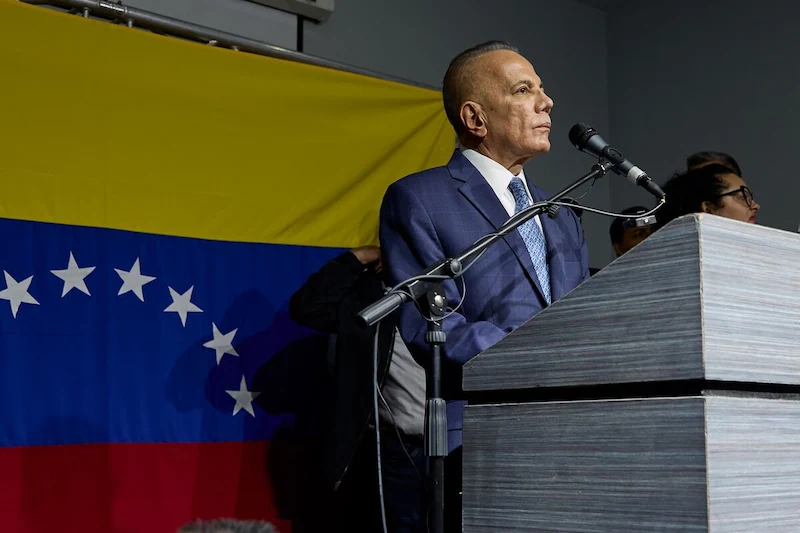


In a surprising turn of events, a key Venezuelan opposition party has thrown a curveball in the upcoming presidential election by registering its own candidate, further fragmenting the already divided group of political opponents to President Nicolas Maduro. The party, known as A New Era, chose to enter Zulia state Governor Manuel Rosales as their candidate for the July election. This move came at the last minute, as it became apparent that the opposition coalition would not be able to enroll their candidate in time.
The decision to register Rosales was met with mixed reactions. A New Era stated that they believed abstention was not an option and saw this as a way to ensure opposition forces remained in the electoral race. However, leading opposition figure Corina Yoris expressed disapproval, labeling the move as a "betrayal" and suggesting collusion between the candidate and the government.
Despite the opposition coalition's disagreement with Rosales' candidacy, Neighborhood Force, a party of opposition dissidents controlling several municipalities, announced their support for him. This development indicates a rift within the opposition, with different factions backing alternative strategies in the face of Maduro's apparent attempts to hinder stronger representatives from participating in the election.
The government's previous decision to bar Maria Corina Machado, a prominent opposition figure, from running for public office has heightened tensions leading up to the election. Additionally, the intensified persecution of Machado's allies and aides, with warrants issued for their arrest, has further complicated the political landscape.
Manuel Rosales' candidacy must still be approved by the electoral authority, and potential challenges or further actions from the government could loom ahead. Rosales, a seasoned politician who previously ran for president in 2006, faces the possibility of being sidelined once again by government interference.
As the presidential election approaches, uncertainties abound. The government claims to have invited international observation groups to oversee the vote, but their attendance remains unconfirmed. The entrance of Rosales as a candidate adds a new layer of complexity to an already tumultuous political scenario, leaving Venezuelans and international observers alike on edge as they await the unfolding of this pivotal moment in the country's history.