


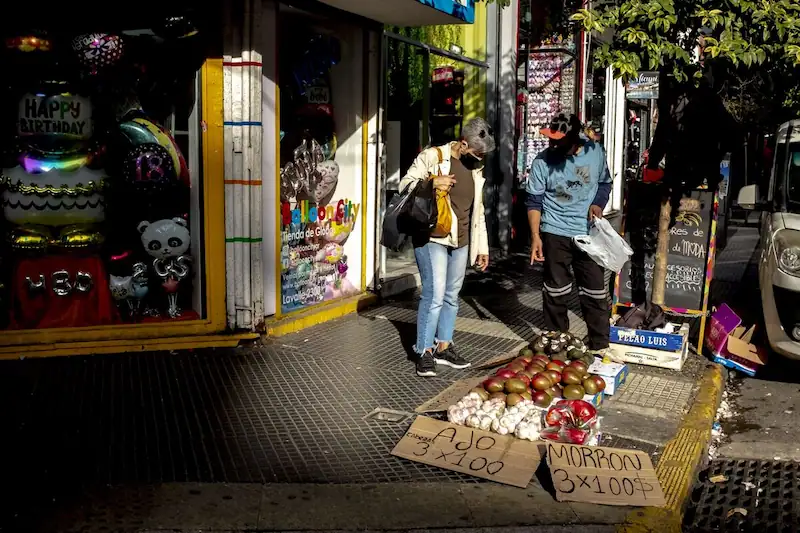


In the latter half of 2023, Argentina witnessed a slight uptick in poverty levels, reaching 41.7% as inflation surged uncontrollably, squeezing household budgets and eroding purchasing power even before President Javier Milei’s shock therapy policies took full effect. This increase, up from 40.1% in the previous period, mirrors the harsh reality faced by many Argentines as they struggle to make ends meet in the midst of economic turmoil.
The relentless rise in annual inflation, surpassing 276%, has been a primary driver of the country's escalating poverty rates. This calculation, based on the cost of essential goods in comparison to average wages, paints a stark picture of the financial challenges plaguing a significant portion of the population. By December 2023, the cost of basic necessities had already outpaced incomes, exacerbating the financial strain on households across the nation.
President Milei wasted no time implementing drastic measures to address the economic crisis upon assuming office on December 10. His strategy included a substantial devaluation of the currency, sharp cuts in government spending, and significant reductions in public investment. The resulting austerity measures have had far-reaching consequences, including an 11% real-decline in paychecks in December, marking the most significant monthly income loss in nearly three decades.
Despite the severe austerity measures implemented by the government, President Milei has made efforts to mitigate the impact on the most vulnerable segments of society. Days before the release of the latest poverty data, new spending increases were approved for key welfare programs, reflecting a commitment to supporting those most in need during these challenging times. However, with the economy contracting by 1.9% in the fourth quarter of 2023 and further predictions of a 3.5% contraction in 2024, the road to economic recovery remains long and arduous for Argentina.