


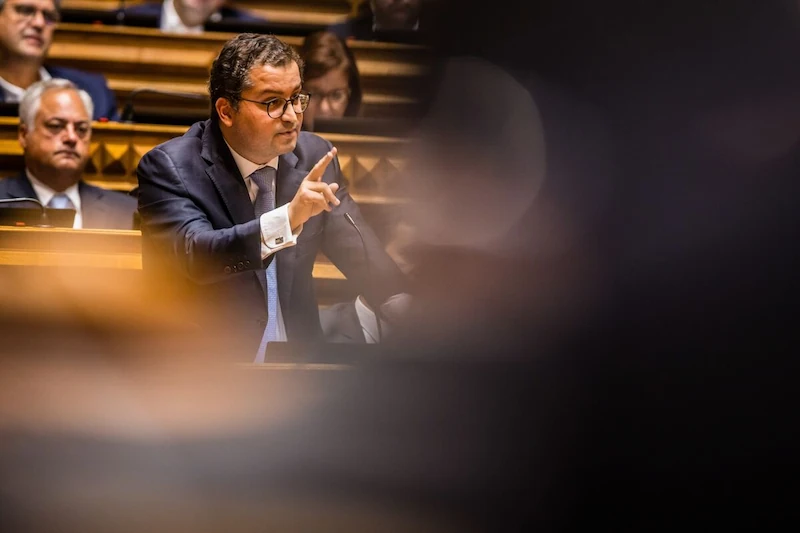


Portugal's newly appointed Prime Minister has named Joaquim Miranda Sarmento as the Minister of Finance, entrusting him with the crucial task of managing fiscal policy for a government that lacks a majority in parliament. Miranda Sarmento, a 45-year-old finance professor and leader of the PSD party, played a key role in crafting the center-right coalition's electoral promises, including proposed tax cuts for businesses and workers. As the new Finance Minister, he faces the challenge of translating these proposals into an official budget for the upcoming year, knowing that its approval will require navigating a fragmented parliament.
The appointment of Miranda Sarmento comes at a time of political uncertainty in Portugal, as the recent parliamentary elections resulted in a narrow victory for Luis Montenegro's AD coalition over the opposition Socialists. With no clear majority, the new government may have to make compromises on its key policies to secure enough support for budget proposals and other legislative matters. The upcoming 2025 budget, scheduled for October, is expected to be a significant test for the government's stability and ability to govern effectively.
The recent deadlock in parliament during the election of a new speaker serves as a reminder of the challenges facing the new government. Far-right party Chega's unexpected refusal to back Montenegro's candidate for speaker led to a prolonged standoff, eventually resolved through a deal with the Socialists to share the speakership. Chega's increased influence following the election has added another layer of complexity to the political landscape, further highlighting the need for strategic alliances to pass legislation.
Despite the differences between the AD coalition and the Socialists, there may be room for cooperation on specific issues. While Socialist leader Pedro Nuno Santos has expressed skepticism about supporting the AD government's budget proposals, both parties could find common ground on certain policy measures. The dynamics of Portugal's multi-party system necessitate a delicate balancing act to ensure the functioning of the government and prevent early collapses.
As the new government takes office, it must address pressing economic challenges, including the privatization of state-owned airline TAP SA. The AD alliance's plans to gradually reduce corporate tax rates and implement other tax cuts come amid a backdrop of economic growth and the need to manage public debt levels. Additionally, the government's focus on budget surpluses and debt reduction reflects its commitment to fiscal stability and long-term economic sustainability.
In shaping its agenda, the new government will also have to navigate external economic factors, such as the ongoing recovery from the COVID-19 pandemic and Portugal's position within the eurozone. With a team of experienced ministers, including Pedro Reis as Economy Minister and Paulo Rangel as Foreign Minister, the government aims to steer the country towards continued growth and prosperity. The swearing-in of the new government on April 2 marks the beginning of a challenging but potentially transformative chapter in Portugal's political and economic landscape.